
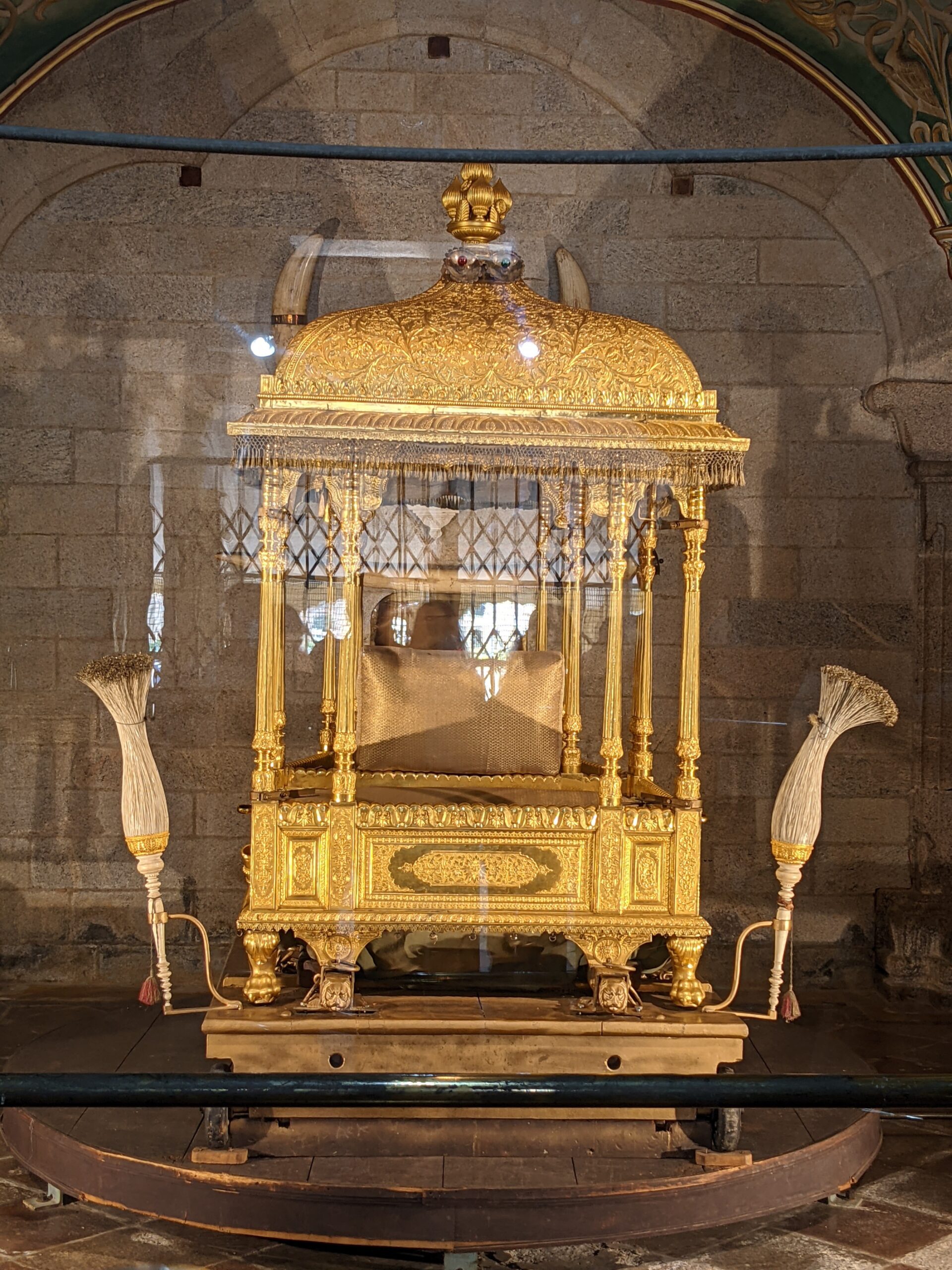
When you visit Mysore, one thing nobody wants to miss is the Golden Ambari inside the palace. In the same way, throughout my walk inside the Mysore Palace, I was eagerly waiting to see the Ambari.
I was curious. How does it really look? Is it truly made of gold? How big is it in real life? So many questions were running through my mind.
And finally, there I was — standing right in front of the Ambari.
Mysore Palace Golden Ambari
When I finally stood in front of the Golden Ambari, I paused for a moment. It was not just shining because of the gold. The detailed carvings and royal design made it look grand and elegant at the same time. I tried to imagine how it would look during the Dasara procession, placed on top of a decorated elephant and moving through the streets of Mysuru.
That curiosity made me learn more about it.
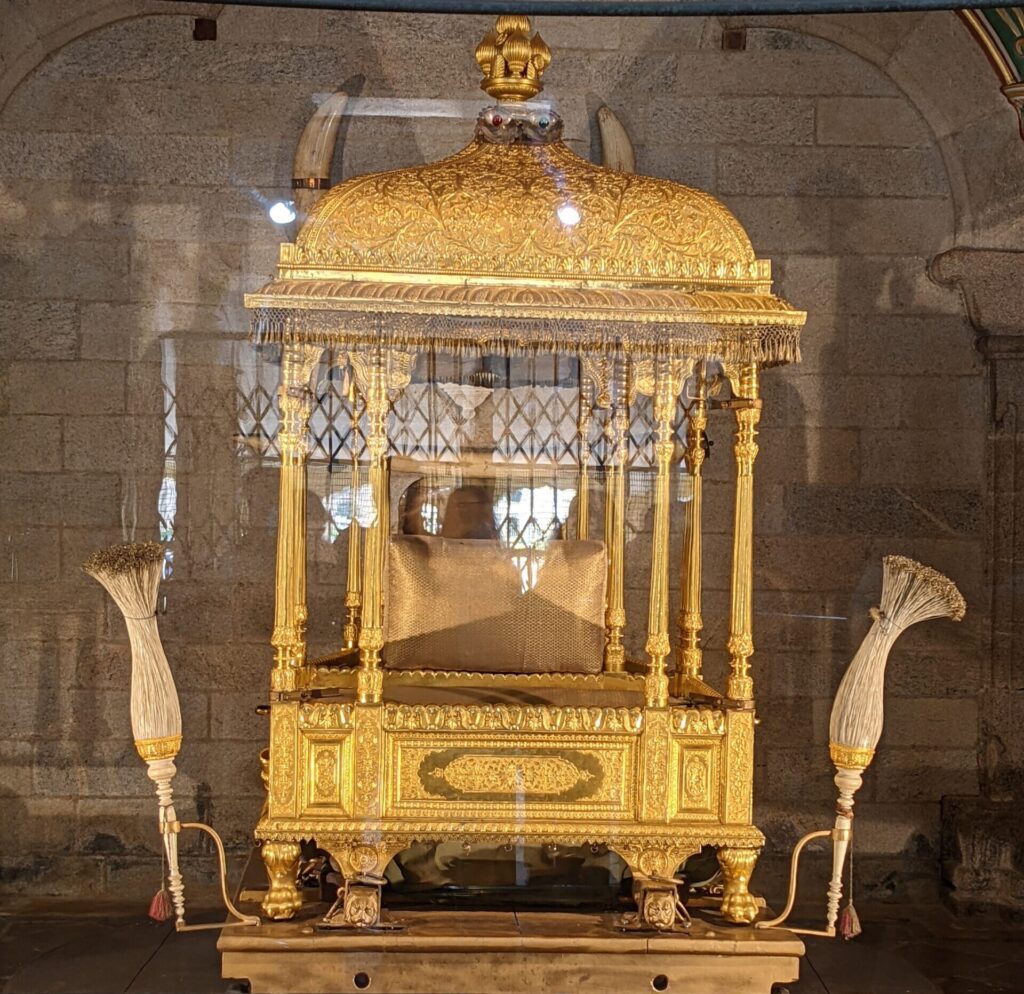
The Golden Ambari, also known as the Golden Howdah or Chinnada Ambari, is a beautifully decorated royal seat. It is specially designed to be placed on top of an elephant during important occasions. Especially the famous Mysore Dasara festival.
In earlier times, the Maharaja of Mysore would sit in this golden howdah during the grand Dasara procession, known as Jumbo Savari. The decorated elephant carrying the Ambari would lead the royal procession through the city, symbolizing power and tradition.
However, after 1971, when the Privy Purse was abolished, this tradition changed. Instead of the Maharaja, the idol of Goddess Sri Chamundeshwari — the presiding deity of Mysuru began to be placed in the Golden Ambari. Since then, every year during the Vijayadashami procession, the goddess idol is carried on a decorated elephant as part of the Jumbo Savari.
Even today, the Golden Ambari remains the main attraction of the Mysore Dasara celebrations and holds deep cultural and historical importance.
Golden Ambari Weight
Though the exact year of its creation is not clearly known, the Golden Ambari was renovated and given its present form during the reign of Krishnaraja Wadiyar IV (Nalvadi Krishnaraja Wadiyar), who ruled from 1902 to 1940.
The structure is mainly made of wood and weighs around 750 kilograms in total. Out of this, nearly 85 kilograms is pure gold used to cover and decorate it. The intricate gold work on the howdah was done by Sri Singannacharya, who was known as “Swarnakala Nipuna,” meaning an expert in gold craftsmanship.
The Golden Ambari has two wide seats. The central seat, which holds the idol during the procession today, is made of silver. The four supporting pillars around the seat are beautifully carved and decorated, reflecting skilled craftsmanship and royal design.
The Tradition of Dasara Procession
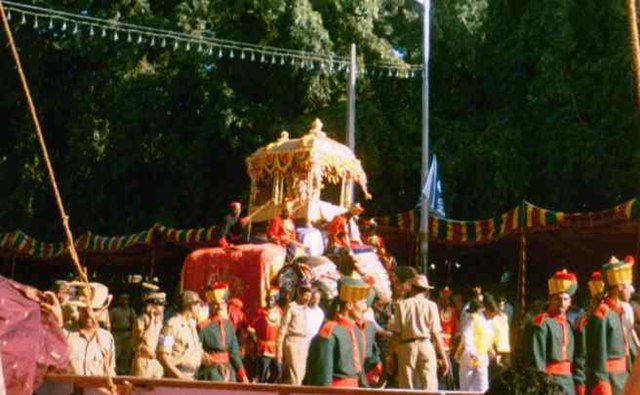
Every year during Navaratri, Mysuru celebrates the grand Dasara festival for nine days. On the final day, Vijayadashami, the famous Jumbo Savari procession takes place.
During this procession, the Golden Ambari is placed on the lead elephant and carried through the main streets of Mysuru. The procession covers a distance of about 5.5 kilometers. It begins at the Mysore Palace and ends at Bannimantapa, where the concluding rituals of the festival are performed.
The decorated elephant carrying the Ambari, along with cultural troupes, music bands, and traditional performances, makes the procession the main highlight of the Mysore Dasara celebrations.
Lead Elephants to Carry Golden Ambari
The Elephant (lead elephant), which carries this Golden Ambari, is well-trained and groomed in advance for this purpose for years. From 1999 to 2011, the “Balarama” elephant carried the golden howdah 13 times in a row (for 13 processions). Later in 2012, the “Arjuna” became the lead Elephant after defeating the Balarama in rehersals.
After the government selection of the lead Elephant in October 2012, Arjuna carried the golden howdah for 7 years during Dasara festivities, from 2012 to 2019. And in 2019, elephant Arjuna was added to the list of retiring elephants (over 60 years of age). Since then, the duty of carrying the Golden Howdah has been assigned to “Abhimanyu.” And Abhimanyu has been the lead Elephant carrying the Ambari during Dasara processions since 2020.
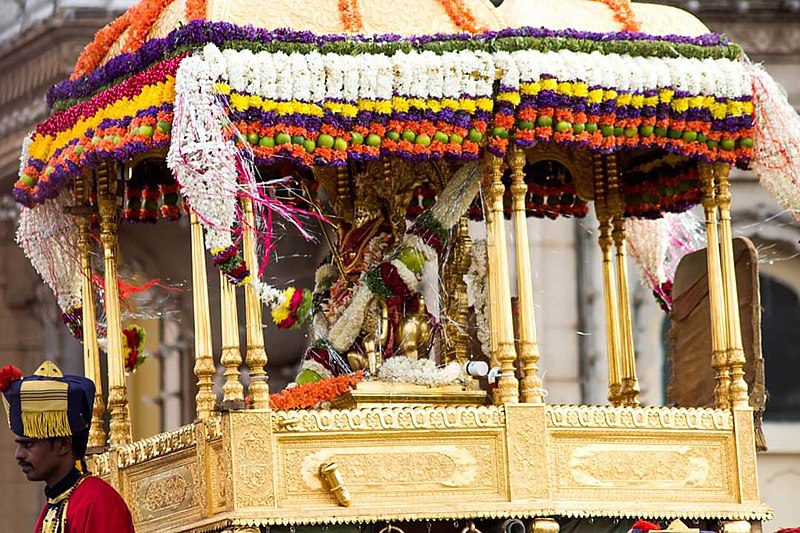
During the Jamboo Savari procession, a decorated elephant carrying the idol of Goddess Chamundeshwari, the presiding deity of Mysore, is taken around the city in a grand procession. Other decorated elephants, horses, camels, and cultural troupes from different parts of the state accompany the Elephant. The procession also includes various tableaus depicting the state’s rich cultural heritage.
The Jamboo Savari procession is a major attraction of the Mysore Dasara festival and draws a huge crowd of tourists and locals alike. The event is marked with much fanfare and celebration, symbolizing the state of Karnataka’s rich cultural heritage and traditions.
Remembering the Legacy of Balarama Elephant
With heavy hearts and deep sadness, we bid farewell to a true icon of Mysore’s cultural heritage, the legendary lead elephant Balarama. After a remarkable journey of 65 years, Balarama, a symbol of grace and majesty, has peacefully passed away, leaving behind a void that will be felt by all who knew and admired him.
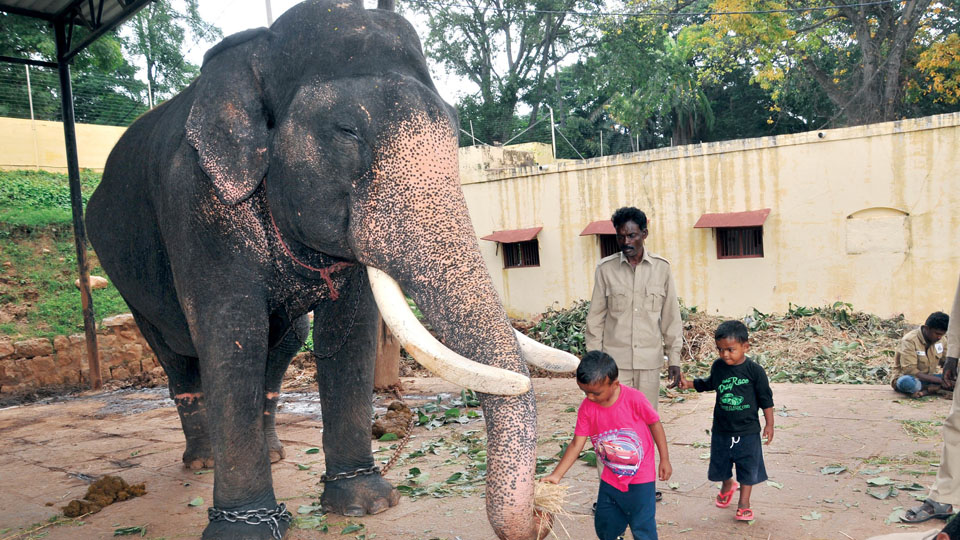
Balarama owns the pride of carrying the majestic Golden Ambari/Golden Hawdah, continuously 13 times – from 1999 to 2011. The Predecessor of Drona, and the Successor of Arjuna, the lead elephant Balarama was first captured in the Kattepura forest in Kodagu (Coorg Region). He weighed 4590 Kilograms, with a height of 2.7 m (8 ft 10 in), Balarama was looked after at the Morkal Elephant camp at Nagarahole national park. The Mahout who took care of Balarama was Sannappa, after his retirement the duty was assigned to Master Thimma.
Since April last week, Balarama was critically ill. And he was under treatment by veterinarians at the Bhimanakatte elephant camp in the Hunsur range. He was suspected to be suffering from mouth ulcers and Tuberculosis. But despite all the medical efforts, Balarama passed away on 7th May 2023.
As we say our final goodbye to Balarama, it is essential for us to reflect upon the valuable lessons he imparted to us. Through his strength, dignity, and unwavering commitment to our cultural heritage, Balarama reminded us of the profound connection we share with the majestic creatures that inhabit our planet. In honor of his memory, let us wholeheartedly embrace the traditions he embodied, ensuring that his legacy endures within the hearts and minds of generations to come.
Another Legend Lost
As we still trying to accept the loss of Balarama, we lost another lead elephant of Mysuru Dasara – The Arjuna. Arjuna was the lead elephant and carried Golden Howdah and Goddess Chamundeshwari from 2012 to 2019. He was named after the famous Pandavas – Arjuna.
Arjuna was part of an operation to tackle wild elephants in Western Ghats, held by the Forest Department Of Karnataka. Unfortunately, Arjuna breathed his last during the operation, by an attack of wild tusker. This incident happened just few days after the Dasara Festival of 2023. And Arjuna left us on 4th December 2023.