
Though I had visited Bengaluru once or twice before, I shifted here in 2011 for a job. After completing my BCA graduation, I got selected through campus placement and joined Wipro. Since my office was in Electronic City, I chose to stay in Madiwala in a PG accommodation.
When I first moved to Bangalore, I realised something interesting. Almost everyone I met was from a different state. Office friends from Kerala, neighbours from North India, colleagues from Andhra, roommates from different parts of Karnataka. And auto drivers speaking in a mix of Kannada, Tamil, Telugu and Hindi. That is when I understood why people say Bangalore is a city of migrants.
It was more like a cultural shock for me. No doubt, I had visited different states and cities before, but not for more than a week. Bangalore looks glamorous and like the most happening city from far away. Everyone who sees it dreams of coming and settling here. I also had that feeling once.
But that craze did not stay for a long time.
I mean, I am still in Bangalore. Now I say I am a Bangalorean. I own property here. I have been voting here for the last 11 years. My work, my home, my routine — everything is here. But in the beginning days, I struggled with almost everything. Food was different. Commuting was confusing. Financially, it was not easy either.
Slowly, I learnt to adjust. I understood bus routes. I found places that served food closer to my taste. I made friends. Step by step, I became part of the city.
Yes, this is Bangalore. Namma Bengaluru. It welcomes everyone. It gives life to everyone — if you are willing to work hard and adjust.
But Bengaluru’s story didn’t begin with IT companies. Its roots go back several centuries.
The Origin of the Name “Bengaluru”
There are different stories about how Bengaluru got its name. One popular legend says that Hoysala King Veera Ballala II once lost his way while hunting. A poor old woman offered him boiled beans to eat. In Kannada, boiled beans are called “Benda Kalu.” Out of gratitude, he named the place “Bendakaluru,” meaning “Town of Boiled Beans.” Over time, this became Bengaluru.
Another explanation suggests the name may have come from “Bengaval-uru,” meaning “City of Guards,” as mentioned in the old inscription.
While legends are popular, historians rely more on inscription evidence than folklore. During British rule, the name “Bengaluru” was anglicised to Bangalore because it was easier for the British to pronounce. In 2014, the Government of Karnataka officially restored the original name “Bengaluru.”
The Four Boundary Towers of Old Bengaluru
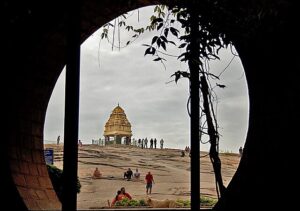
The foundation of modern Bengaluru was laid in 1537 by Kempe Gowda I, a chieftain under the Vijayanagara Empire. He built a mud fort and planned a structured town with markets, temples, water tanks and residential areas. He also constructed four watch towers to mark the boundaries of the city.
Originally, these towers were built to define the boundary of the city in the 16th century. And marked how big Bengaluru was at that time.
Today, the locations of these four towers are:
- Lalbagh Hill
- Gavipuram near Basavanagudi
- Ulsoor (near Halasuru Lake)
- Mekhri Circle area (near Hebbal)
In Kempe Gowda’s time, everything inside these four points was considered Bengaluru. The total area was very small compared to today’s city. It was a well-planned town surrounded by agricultural land and villages.
The interesting thing is that, all these four towers, which were once at the extreme edges of the city, are now almost in the centre of modern Bengaluru.
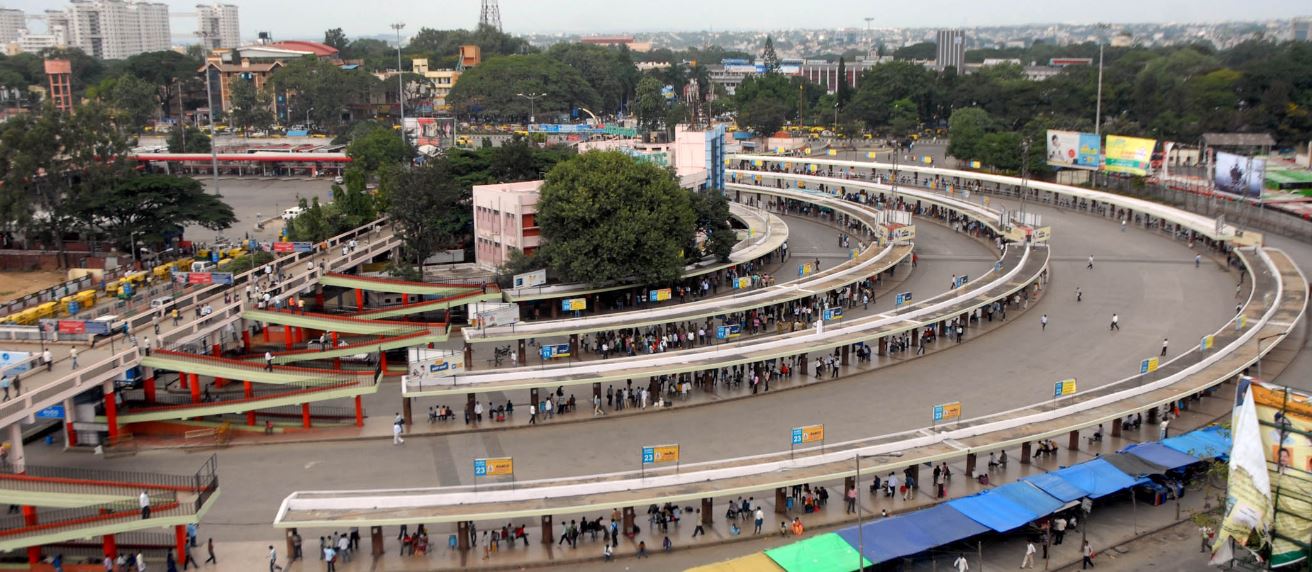
Kempe Gowda not only built a fort and markets, but also several lakes to support the growing town. In those days, water tanks were the lifeline of the city. Many of today’s busy areas were once peaceful water bodies. In fact, the present-day Majestic area was once the famous Dharmambudhi Tank — a large lake that later disappeared and became the city’s main bus station. I have written in detail about how that lake turned into Majestic, you can read that story.
That shows how much the city has expanded.

During the 17th century, the region changed hands between different rulers. It came under Mughal control for a short period and was later taken over by the Wodeyars of Mysore.
In the 18th century, Bengaluru gained importance under Hyder Ali and his son Tipu Sultan. They strengthened the fort and developed gardens, including Lalbagh. After Tipu Sultan’s death in 1799, the British took control of the city.
Then British developed a separate cantonment area for military purposes. This created two distinct parts of the city — the old “Pete” area developed by Kempe Gowda and the British cantonment area. Even today, one can notice the cultural and architectural differences between these two.
Under British rule, Bengaluru saw the development of railway lines, educational institutions, and administrative buildings. After Independence, the city became known as the “Garden City” and “Pensioners’ Paradise” because of its pleasant climate and peaceful environment.
The transformation into the “Silicon Valley of India” began in the late 20th century. Public sector companies like HAL, BEL and ISRO played a major role in industrial growth. Later, the IT boom in the 1990s brought multinational companies, technology parks and lakhs of job seekers from across India. Areas like Electronic City, where I began my career, became symbols of this new Bengaluru.
Looking back, it feels interesting that I moved here because of an IT job, just like thousands of others. But the city I came to work in has a much older story. One that began with inscriptions, forts, watch towers and kingdoms long before software companies existed.
Today when I walk through the busy streets, sit in traffic, or visit the old parts of the city, I see Bengaluru differently. It is not just the IT parks, malls or flyovers. It is a city that has grown layer by layer. From a small town marked by four watch towers to a global technology hub.
Just like the city expanded beyond its old boundaries, many of us who came here have also grown beyond who we once were. Bengaluru gave me challenges, lessons and opportunities. And somewhere between its history and its present, I found my own place here. Namma Bengaluru.