
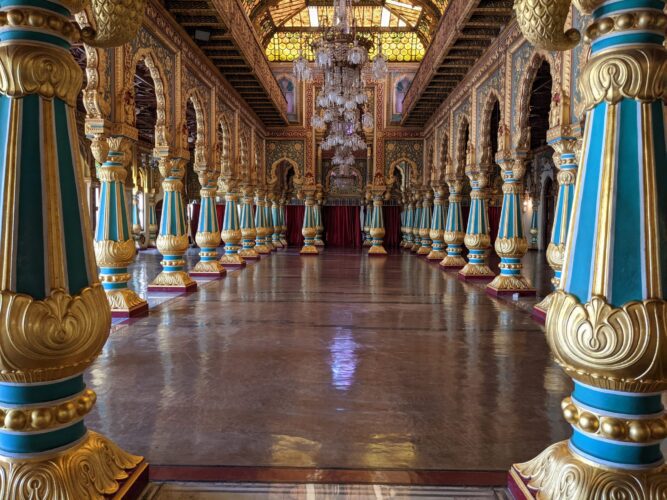
Probably, I was in 9th standard when I first visited the Mysore palace. It was a school trip, and everyone was really excited. I mean, obviously, who will not be excited to witness a place and a palace, which we saw in most of the Kannada movies? Especially the “Mayura” movie. Yes, I am talking about the Mysore palace. The pride, jewel, and royal heritage of Mysuru.
Many movies are shot in and around this palace. But Mayura movie of Dr Rajkumar is the last movie that was allowed to shoot inside the Mysore Palace. Let’s imagine the scenes and know more about the palace.
As kids, we just went in lines, following our teachers. We just saw it as a place of kings and queens. And the place where movies are shot. That much was enough for us to get excited. That was the first time, but definitely not the last time, I went to the palace.
After that, I visited Mysore Palace many times. During our 11th grade, during graduation, and now I have lost count how many times I visited after I started working in Bengaluru.
I couldn’t take any inside pics those days, because of the weekend rush. But after COVID 2nd lockdown, I happened to stay in Mysore for 2 months. It wasn’t that crowded then. May be because of the lockdown rules and the Covid fear in people. It was peaceful, hardly countable tourists. And lot of time to crawl inside the palace.
I was just imagining the scenes of Mayura movie, and those fights inside the palace hall, while walking in the palace. What I saw, what I felt, can’t be explained just in words.
My visit to Mysore Palace
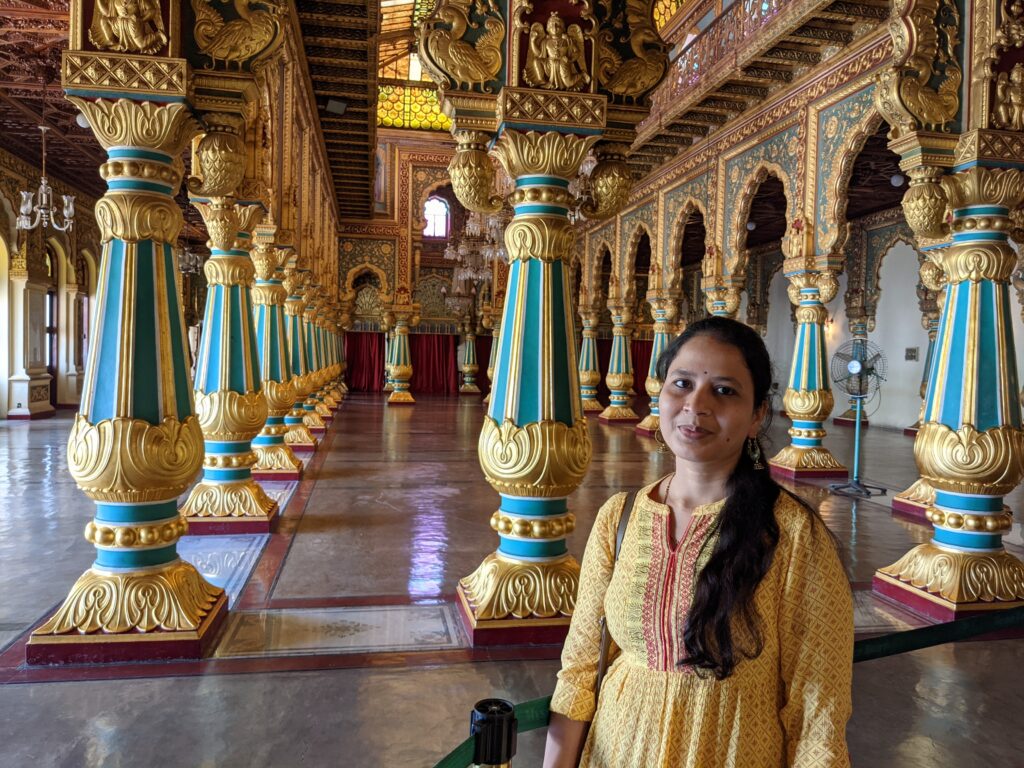
Mysore Palace is one of India’s most royal and enormous palaces. It is also known as Amba Vilas Palace, which was the residential place of the Wadiyar Dynasty.
Key Highlights of Mysore Palace
- Mysore Palace has a very long and rich history. The present palace was completed in 1912 and stands as a strong symbol of Mysuru’s cultural heritage.
- The palace is built in the Indo-Saracenic style. It beautifully blends Hindu, Islamic, Gothic, and Rajput architectural elements. Its grand dome, arches, towers, carvings, and sculptures make it truly special.
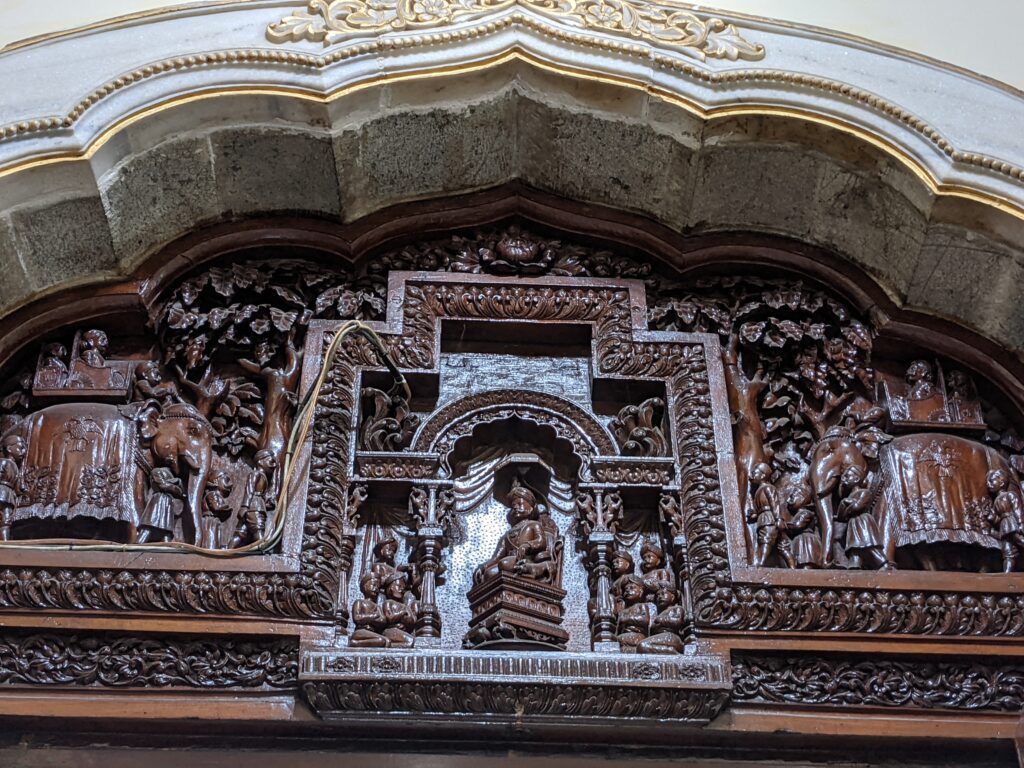
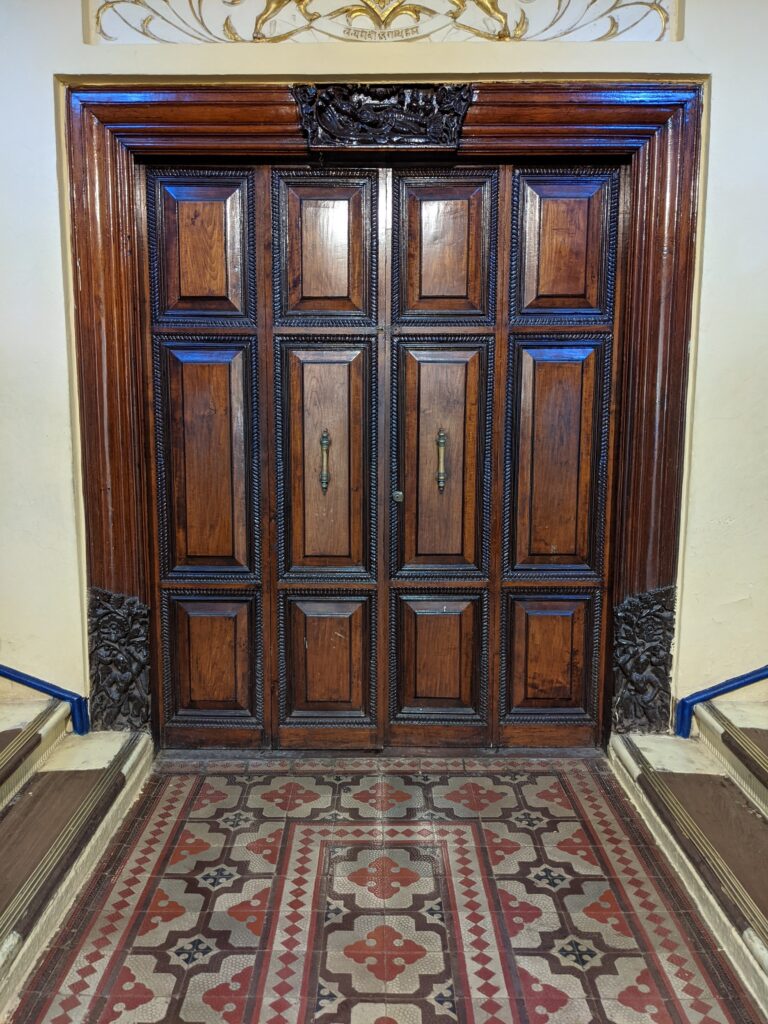
- Inside the palace, you can see beautiful paintings, carved wooden doors, vintage mirrors, and grand chandeliers. These interiors give and idea on the royal life of the Mysore Maharajas.
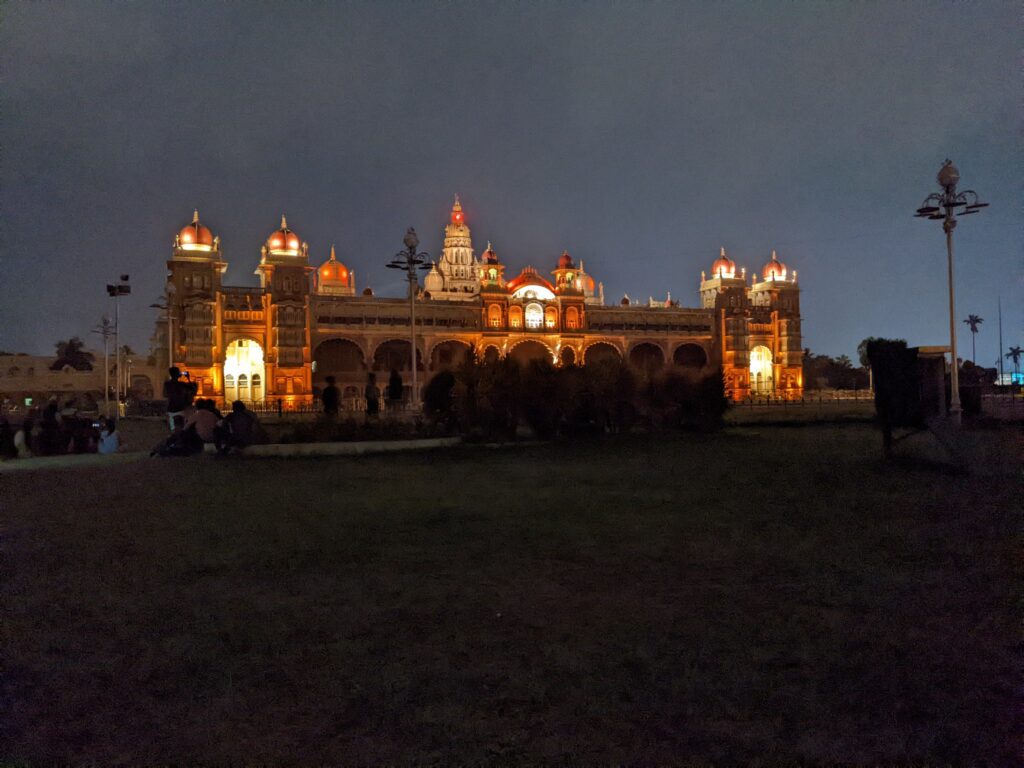
- Mysore Palace gets illuminated with lakhs of lights on Sundays, public holidays, and during Dasara. The glowing palace at night is a magical sight and one of the main attractions for visitors.
- The palace plays a central role during Mysore Dasara festival. Many cultural programs and traditional events happens in the palace during this time.
Inside Mysore palace
Every single corner of the Mysore Palace feels thoughtfully and lovingly designed. Earlier it was a ruling palace and residence of the Wadiyar family. But now it has been converted into a museum, silently preserving those royal memories.
As you enter, the first thing you notice is the grand royal gate. The palace has three main entrance gates.
- The Eastern Gate is opened only during the Mysore Dasara festival.
- The Southern Gate is the main entrance for regular visitors.
- The Western Gate is also used for entry on special occasions.
Stepping inside feels like I am walking back in time. Its a walk through richly decorated halls and rooms. The palace is a three-storey building. I saw royal costumes once worn with pride. Then the musical instruments that must have echoed through these halls. And even children’s toys.
The palace interiors are filled with carved walls, gold-plated and silver doors, marble floors, and unique glass ceilings. Everything carried the weight of royal history. One of the most memorable spaces for me was the royal gallery. Walking through it felt like a strange calm feeling. Almost like the palace was allowing me to share a small part of its royal past with me.
If you truly want to feel the soul of this palace, I would suggest hiring a guide. The stories they tell make the palace come alive. Not as a tourist place, but as a living memory of Mysuru’s royal heritage.
The Royal artifacts inside the Palace
Inside the Mysore Palace, I found many precious art pieces. There are beautiful paintings by Raja Ravi Varma and Venkatappa, which reflect the rich artistic history of Mysuru. And I felt like every painting had a story to tell.
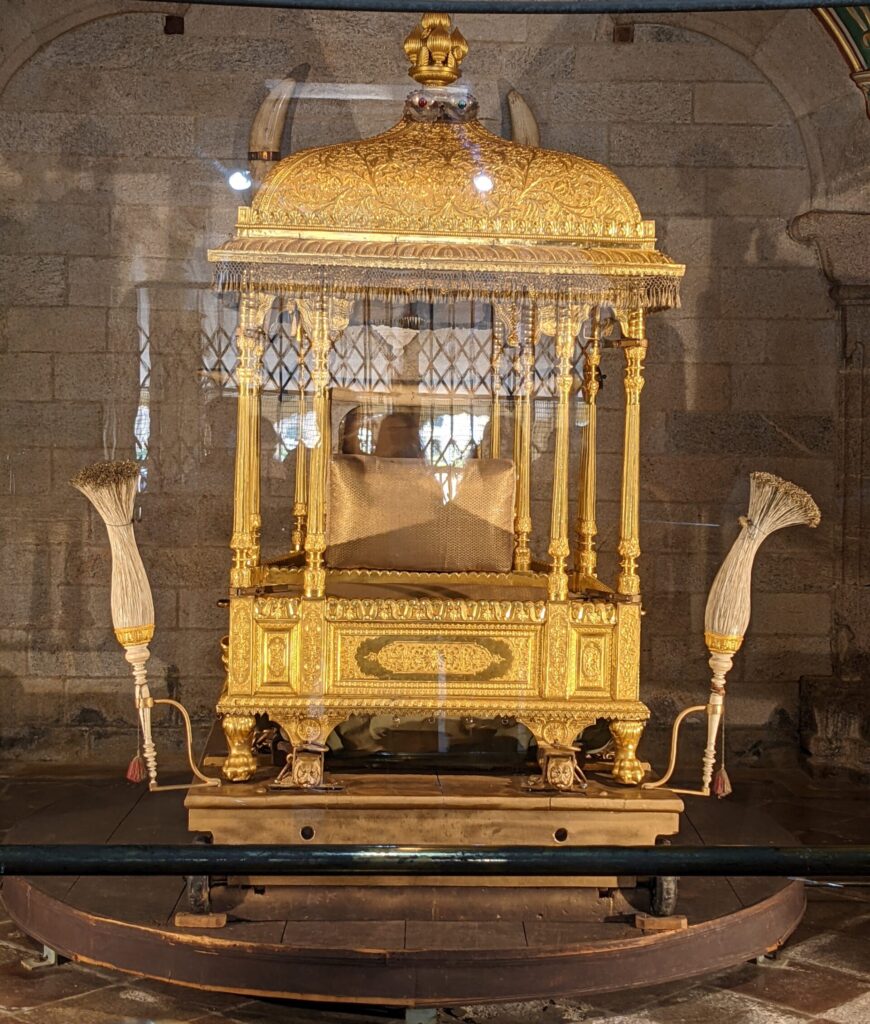
One of the most eye-catching attractions inside the palace is the Golden Howdah – the Golden Ambari. It weighs around 750 kg and is placed on the elephant during the famous Mysore Dasara Jamboo Savari. During Dasara, this golden seat becomes the centre of attraction. And seeing it in person makes you even more proud of Mysuru’s royal heritage.
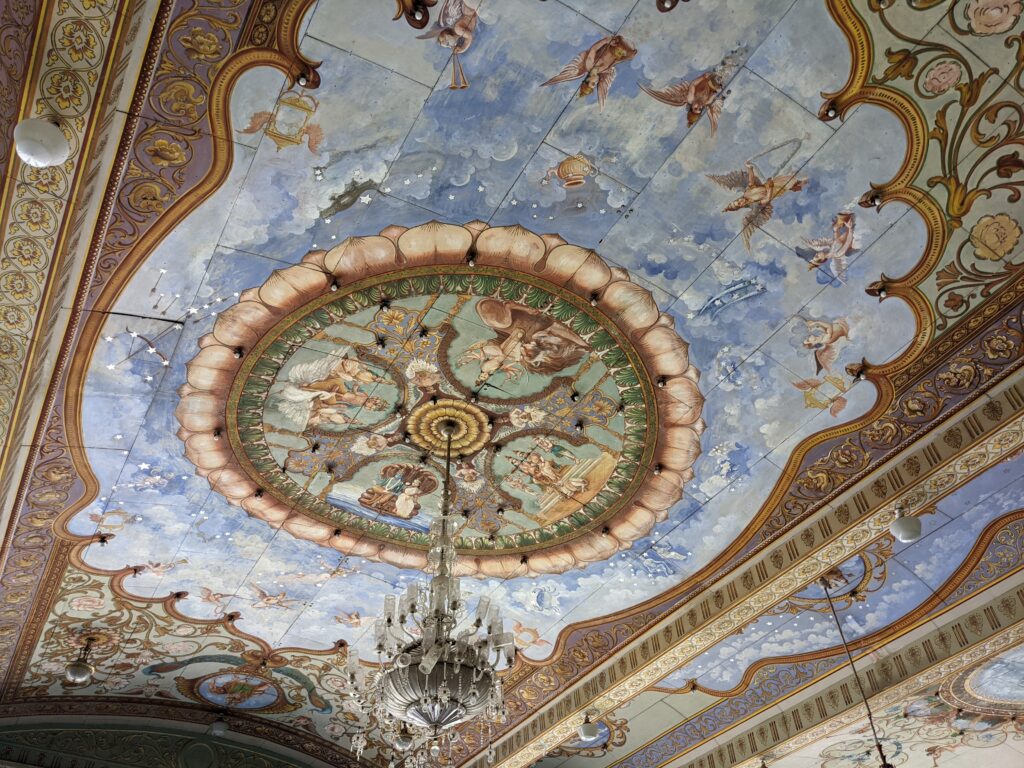
I walked to the Ambavilasa hall. A beautifully designed private hall, where the Maharajas once held their private meetings. It is located close to the Public Durbar Hall, a large space where the kings addressed the people and conducted official ceremonies. It is the same place we see in TVs today during the Dasara festivities.
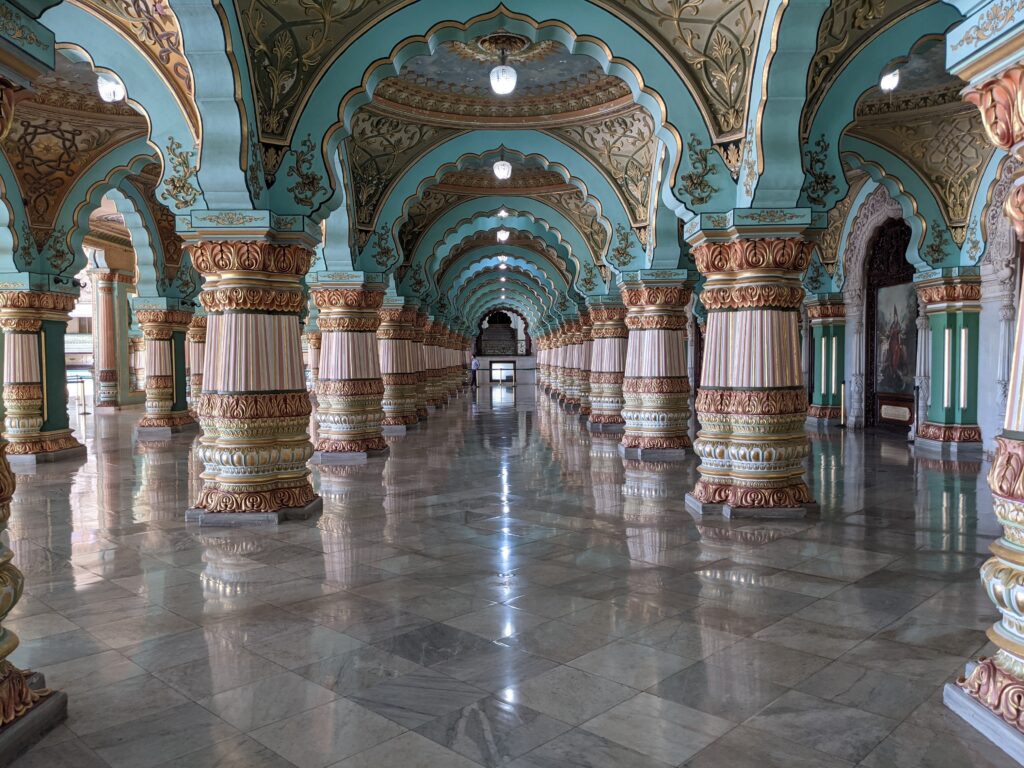
The Ane Bagilu, also called the Elephant Gate, is the main entrance of the Mysore Palace. This strong brass gate was traditionally used during royal processions and important events, especially when elephants entered the palace grounds.
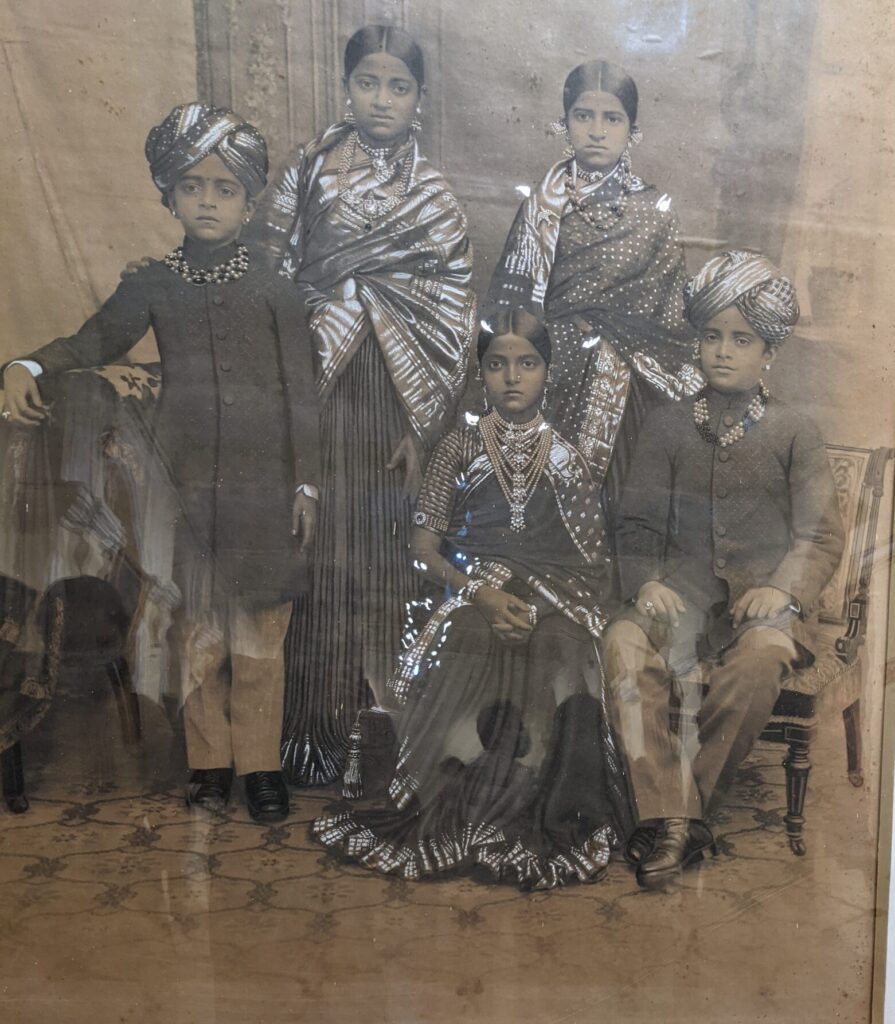
The Portrait Gallery displays priceless paintings and photographs of the Wadiyar royal family. It also includes detailed paintings of the Mysore Dasara procession during those day Showing royal elephants, soldiers, musicians, and many other minute details. Walking through this gallery feels like watching history come alive.
Golden Throne – Chinnada Simhasana
The golden throne is the Maharaja’s elephant seat composed of 85 kg of Gold, 280 Kg in total. The royal throne of this Palace, the Golden Throne, is also known as “Chinnada Simhasana” or “Ratna Simhasana.”
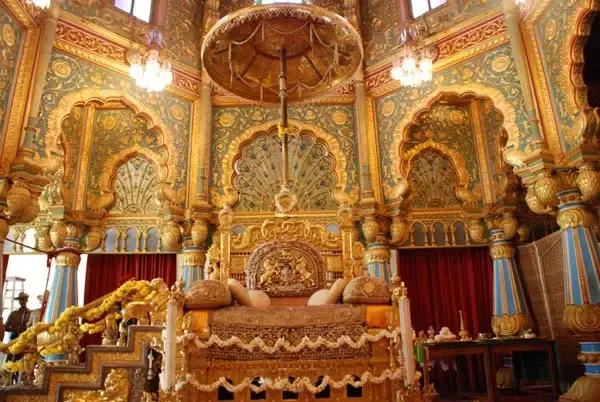
Mysore Palace India: History
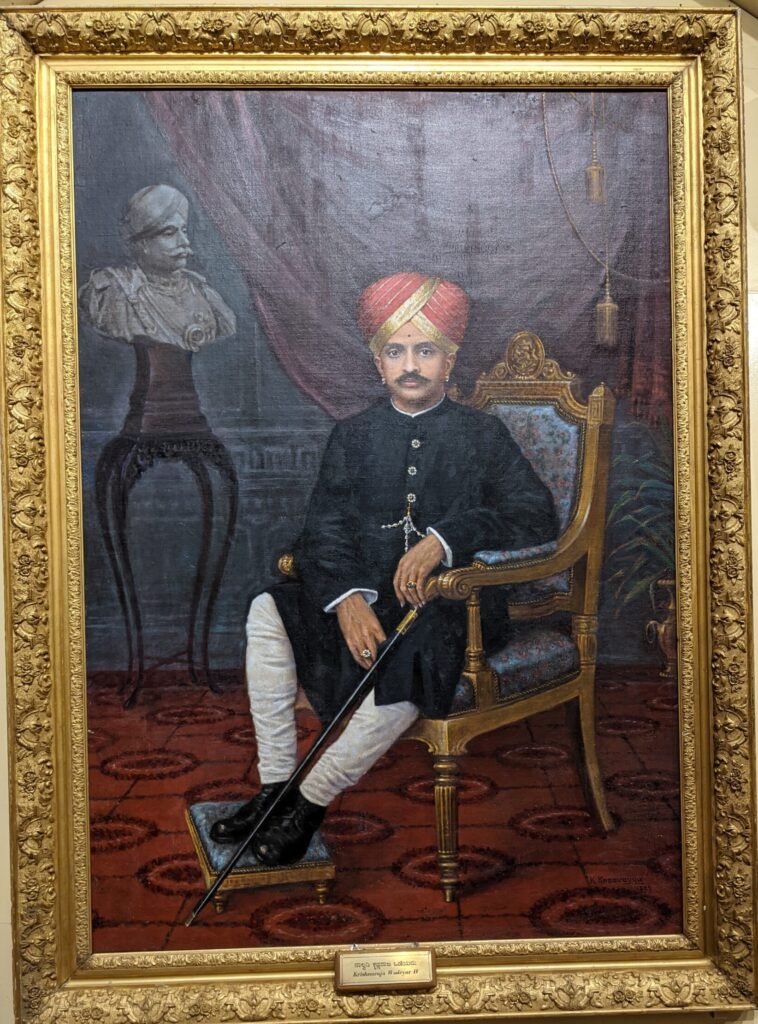
The royal family of Mysore, the Wodeyars (Wadiyars), laid the foundation of this palace many centuries ago. It is believed that during the time of Yaduraya Wodeyar, the founder of the Mysore Kingdom in the 14th century, a palace existed inside the old fort area, which was then known as Puragiri.
Over the centuries, the palace was destroyed and rebuilt many times. The earlier palace was mostly made of wood. In 1638, it was struck by lightning and had to be rebuilt during the rule of Kantirava Narasaraja Wodeyar.
Later, when Tipu Sultan took control over the Mysore in 1782, the Wodeyars lost their power for some years. Historical records say the old wooden palace inside the fort was damaged and changed during this period. After Tipu Sultan died in 1799, Krishnaraja Wodeyar III came back to power under British support. And renovated the palace in the traditional Hindu style.
Unfortunately, in 1896/7, during the wedding of Princess Jayalakshammanni, daughter of Chamaraja Wodeyar, the wooden palace was completely destroyed due to a fire accident. It was a heartbreaking moment in Mysore’s history.
The present Mysore Palace was then built and completed in 1912 by Maharaja Krishnaraja Wadiyar IV. It was designed by the British architect Henry Irwin in the beautiful Indo-Saracenic style. The construction cost around 41 lakh rupees, which was a huge amount at that time.
Even today, in 2026, people of Karnataka lovingly call it “Mysuru Aramane.” The palace shows a mix of Hindu, Islamic, Rajput, and Gothic styles. Skilled workers from different backgrounds came together to build this masterpiece, and that is why you can see a blend of cultures in every corner of the palace.
Mysore Palace Today:
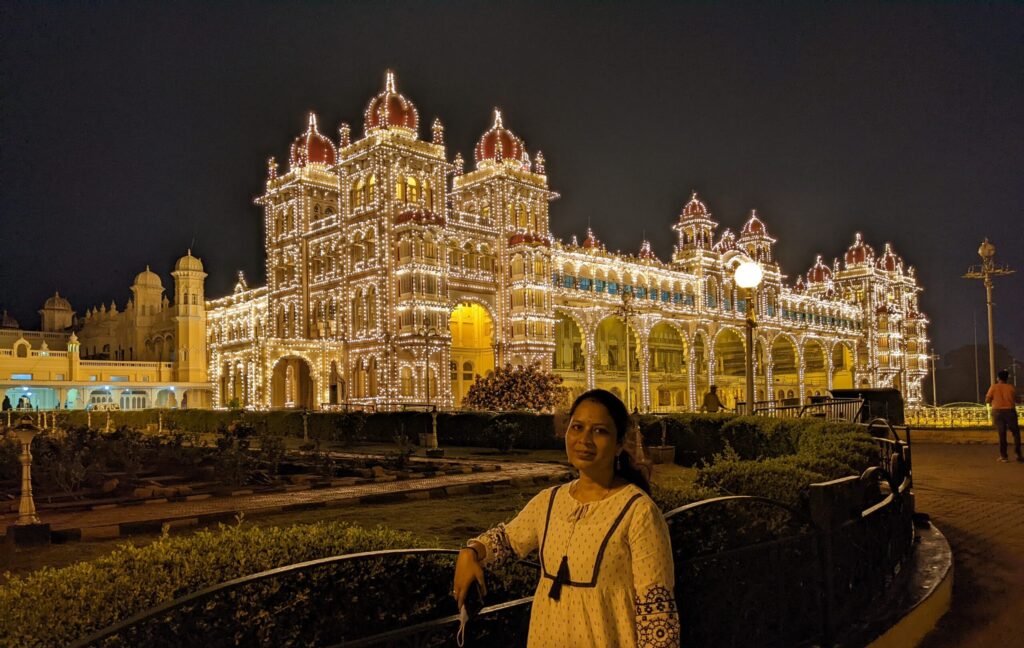
Even today, there is some confusion about who owns the Mysore Palace. Some people say it was donated to the Government of Karnataka. But that is not completely true.
The palace is still owned by the Wadiyar royal family. However, it is maintained and managed with the support of the Government of Karnataka. That is why many people assume it belongs fully to the government.
The palace is open to the public, and you can explore it on your own. Hiring a guide is not compulsory, but it really helps if you want to understand the stories and history behind each hall and painting.
Mysore Palace Timing:
The palace is open every day from 10:00 AM to 5:30 PM. Security checking is done at the entrance, so visitors are screened before entering.
It usually takes around 2 to 3 hours to properly explore the palace.
Entry fees (as of 2026):
Adult: 100/
Children between 10-18 years: 50/
Children below 10 years: Free of cost
Online tickets are available and easy to book.
Mysore Palace Illumination and Sound & Light Show
Illumination occurs every Sunday, on national or local holidays, from 7.00 pm to 7.45 pm.
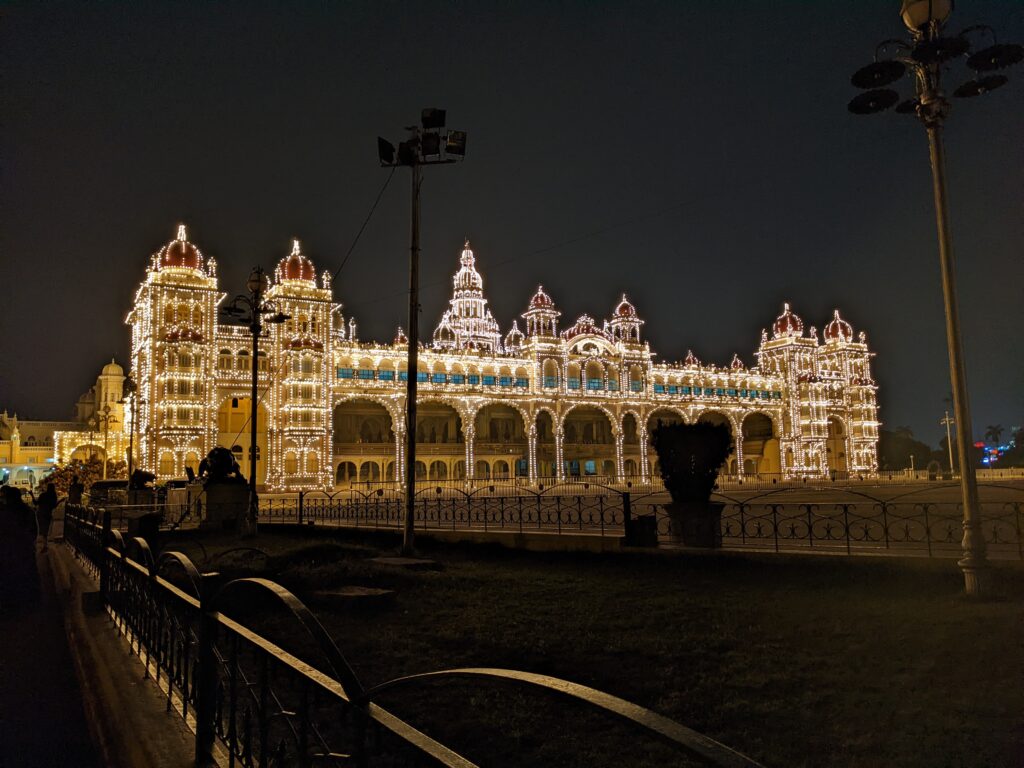
The Sound & Light Show happens on selected days (usually except Sundays and major holidays, as Sundays are reserved only for full illumination).
The show runs for about 45 minutes, followed by 15 minutes of illumination.
English Show
- Usually from Thursday to Saturday
- Around 7:00 PM
Fees:
- Adults: ₹120
- Children (10–18 years): ₹50
- Below 10 years: Free
Kannada Show
- Usually from Monday to Wednesday
- Sometimes additional show on Saturday night
Fees:
- Adults: ₹100
- Children (10–18 years): ₹50
- Below 10 years: Free
(Show timings may slightly change during Dasara season.)
Please note: If the show stops due to rain or technical issues, tickets are generally non-refundable.
Best time to Visit Mysore Palace:
Best time to visit Mysore Palace is between November to February. You can enjoy sightseeing as the Mysore weather is enjoyable during this time, with the calm and mild sun. Also, Dasara time marks the best time to visit Mysore if you want to witness the royal Dasara celebration at Mysore.
How to reach Mysore Palace
Mysore Palace is located right in the heart of Mysore city, so reaching it is very easy.
By Bus:
Mysore has excellent bus connectivity from nearby cities. From anywhere in the city, you can take a city bus to the palace area.
By Auto or Cab:
Autos and cabs are easily available. From the city bus stand, an auto ride to the palace usually costs around ₹30–₹50.
By Train:
If you are traveling from Bengaluru, trains run daily between Bengaluru and Mysore. The journey takes around 3 hours. From Mysore railway station, the palace is just a short auto or cab ride away.
There are also many good hotels near Mysore Palace, so staying nearby is not a problem.
Places to Visit in Mysore:
There are many famous and heritage places to visit in and around Mysore. Some of them are,
- Chamundi Hills and Sri Chamundeshwari Temple
- Sri Chamarajendra Zoological Gardens
- Brindavan Gardens or KRS Dam
- St Philomena’s Cathedral church
- Jaganmohan Art Gallery
- Karanji Kere
- Mysore Rail Museum