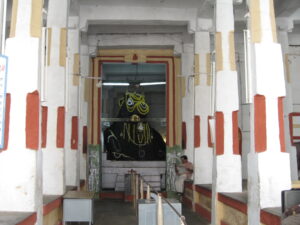
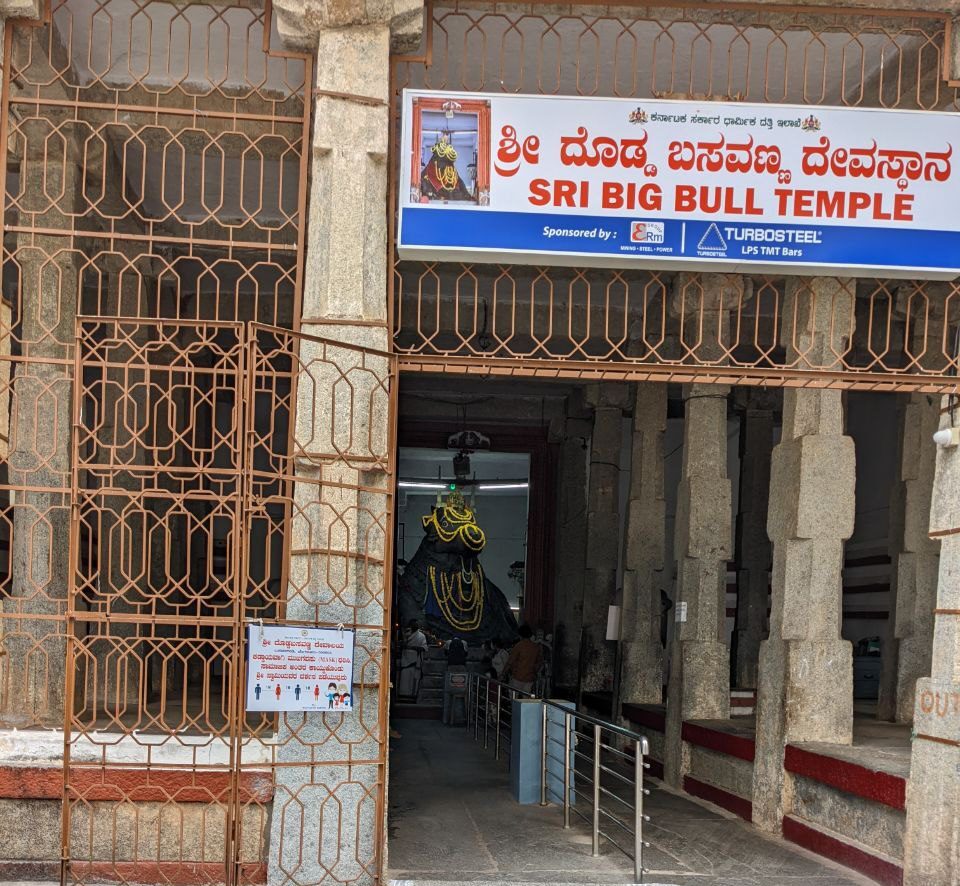
Every time I passed through Bull Temple Road in Basavanagudi, I used to wonder how it got it’s name. Such a simple name became so well known in Bengaluru. Later, I understood that the name is very literal. “Bull” refers to Basava or Nandi, and “Gudi” means temple in Kannada. That is how Basavanagudi got its name — the place of the Bull Temple.
Today, Basavanagudi is one of the most traditional and respected areas in South Bengaluru. But long before it became a busy residential locality, it was part of the early town founded in the 16th century.
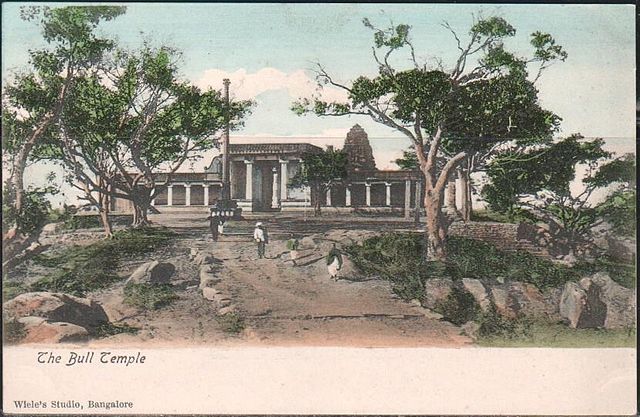
The Origin of Dodda Basavana Gudi
The Bull Temple, officially called Dodda Basavana Gudi, was built in 1537 by Kempe Gowda I, the founder of Bengaluru. He constructed it during the reign of the Vijayanagara Empire to honour Nandi, the sacred bull and vehicle of Lord Shiva.
At that time, Bengaluru was a small planned town. Kempe Gowda had built a mud fort and marked the boundaries of the city with four watch towers. The Bull Temple area was then mostly agricultural land, surrounded by villages and lakes that supported farming.
The temple is located near Bugle Rock Park, a place known for its ancient rock formations. These rocks are considered among the oldest geological formations in the region, which adds historical importance to the area.
The structure of the temple follows traditional Dravidian architectural style. The tower (vimana) seen today was added later, in the early 20th century. The temple itself is not extremely tall, but it has a strong and solid design that matches the powerful presence of the Nandi idol inside.
The Massive Monolithic Nandi Statue
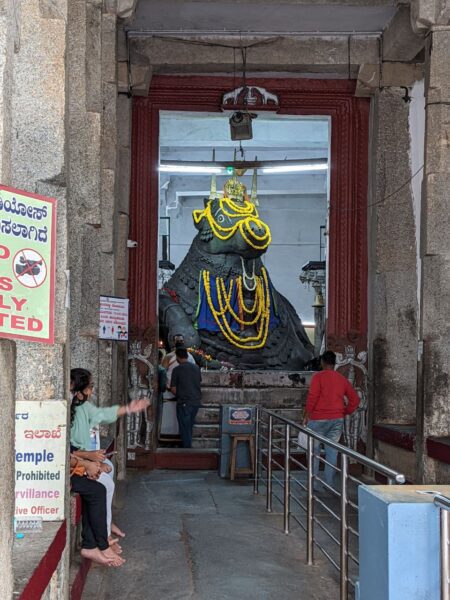
The main attraction of the temple is the enormous Nandi statue. It is carved out of a single, giant granite boulder. Because it is made from one single stone, it is called a monolithic idol.
The statue measures around 15 feet in height and about 20 feet in length. It is considered one of the largest Nandi statues in India.
When you stand in front of it, you immediately notice its size and detailing. The ornaments, chains and decorative carvings around the neck are clearly visible even today. The idol was originally grey in colour. Over the centuries, devotees have applied coconut oil, butter and charcoal as part of rituals. Because of this continuous practice, the statue has gradually turned black.
It is not just a religious idol. It is also a remarkable example of stone craftsmanship from the 16th century.
The Legend Behind the Bull Temple & the Nandi Statue
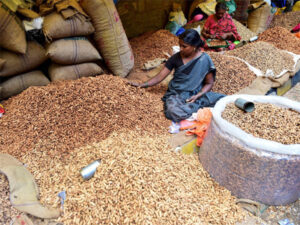
One of the most important cultural events associated with the temple is the annual Kadalekayi Parashe, also known as the Groundnut Fair.
This festival is usually held in November or December, during the Hindu month of Karthika. Farmers from nearby villages bring their first groundnut harvest and offer it to Nandi before selling it.
During this time, the entire Bull Temple Road is filled with stalls selling different varieties of groundnuts — roasted, boiled, salted, sweet-coated and spiced. It is not just a market but a cultural celebration. Thousands of people visit the area during the festival.
The temple and surrounding streets are decorated, and the event reflects the agricultural roots of old Bengaluru. Even today, in a fast-growing IT city, this festival reminds people of its village past.