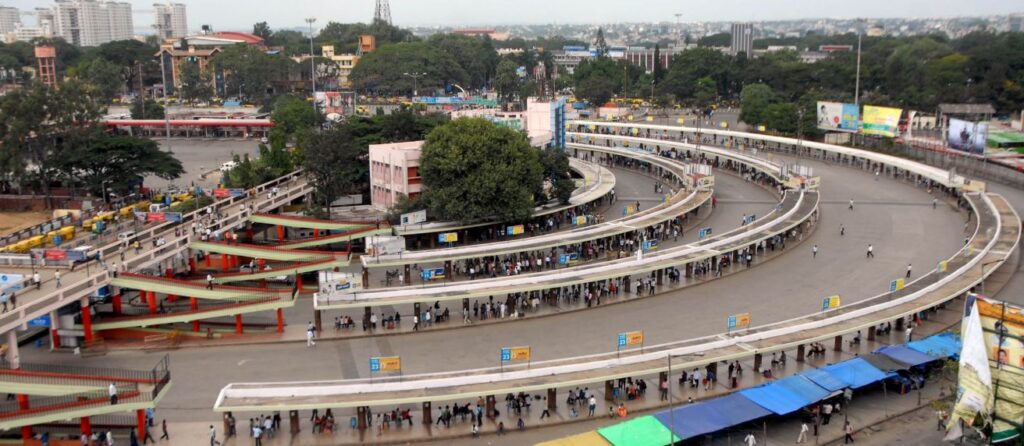
When we say something is majestic, we usually mean it looks grand or impressive, right? Interestingly, there is a place called “Majestic” in Bangalore. First time I heard about this name was in 2011, when I just came to the city and was asking someone for bus information. They simply said, “Go to Majestic.” I remember wondering, what kind of name is that for a bus stop?
Later, I found out that Majestic is actually the main city bus station of Bangalore. The central bus hub where buses connect to almost every part of Bangalore.
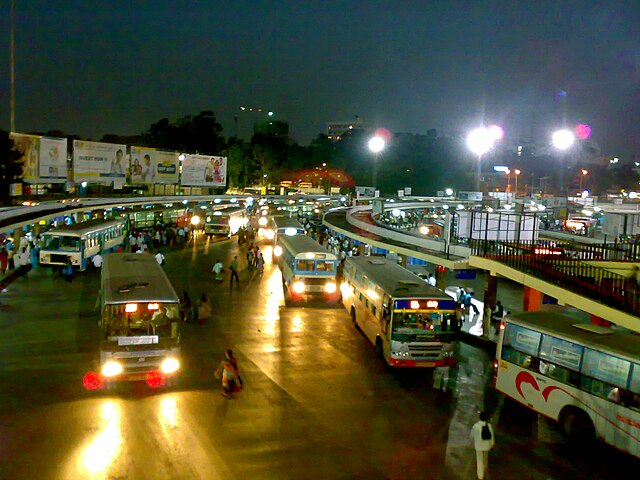
Officially, it is called Kempegowda Bus Station. Many people also refer to it as City Bus Stand. But even today, for most Bangaloreans, it is simply “Majestic.”
Have you ever wondered why it is called Majestic? Is it because the station looks grand? No. The story behind the name has nothing to do with the beauty of the bus station. To understand it, we must go back in time, long before buses, platforms, and traffic chaos.
A Lake Turned To Bus Terminal
Believe it or not, this busy bus station was once a lake. Yes, where thousands of buses stand today, was all water once.
When Kempe Gowda I founded Bangalore in 1537, he built several tanks (lakes) to support the new city. One of them was Dharmambudhi Tank, also known as Dharmambudhi Kere. This tank stood exactly where Majestic stands today.
In those days lakes were not meant to be decorative like many are now. They were essential for survival. Dharmambudhi Tank was one of the chief sources of drinking water for the people of old Bangalore (Pete area). Water from the tank flowed through channels into the streets, and people collected it from stone basins called karanjis. In many ways, this lake was the lifeline of the city.
The name itself is meaningful. In Kannada, Dharma can mean charity or donation, and Ambudhi means a water body. It is believed that since the tank was built to support the public, it came to be known as Dharmambudhi – a lake created as an act of dharma.
Prince Albert Victor’s Visit To Bangalore – 1889
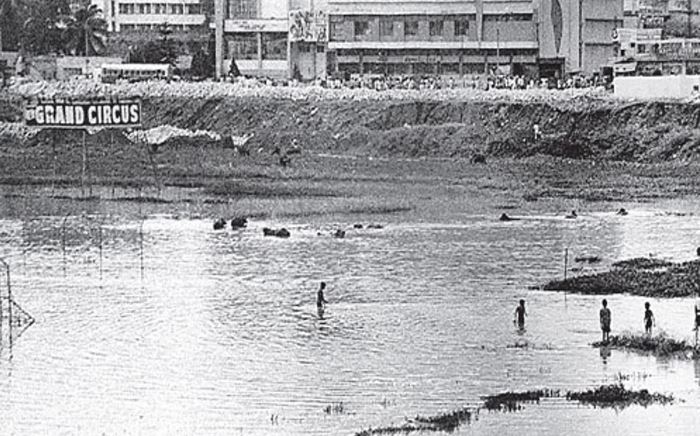
One of the most remembered moments in the history of Dharmambudhi Tank happened in 1889. Prince Albert Victor, grandson of Queen Victoria, visited Bangalore that year. When he arrived at the Bangalore City Railway Station, he was welcomed in a grand way.
Right opposite the railway station there was the vast expanse of Dharmambudhi Tank. A decorated float or boat was arranged on the water to welcome him. Bharatanatyam dancers in colourful attire performed on this float as part of the welcome ceremony.
Just imagine that. The same place where we now see buses, traffic and flyovers once hosted a royal welcome on water. It is hard to believe, but it is true.
The Decline of Dharmambudhi Tank
Over time, things began to change. The tank was maintained well for many years. And even desilted during the 1877 famine to improve water storage. Later, negligence slowly set in. During dry seasons, when the water level was less, the dried lakebed was misused by the people. Poor sanitation practices contaminated the tank. Later during the rains, the accumulated waste flowed back into the water.
Between 1892 and 1894, when monsoons failed, Bangalore faced huge water shortages. Efforts were made to improve water supply by drawing from nearby tanks. But couldn’t restore the original level of water.
In 1896, piped water supply from the Hesaraghatta Lake reservoir began serving Bangalore people. Once the city received water through modern systems, Dharmambudhi Tank gradually lost its importance. Without maintenance, it eventually dried up completely. The lake that once sustained Bangalore became an empty ground.
Dharmambudhi Tank To Children’s Park
After the Dharmambudhi Tank completely dried up, the city completely began depending on piped water supply from Hesaraghatta. Post that there were no serious efforts made to restore the lake.
By 1905, the Government of Mysore decided that since the tank was no longer serving its original purpose, the land should be used for other purposes. A proposal was made to convert part of the dried tank bed into a children’s park. The idea seemed practical. The area was located very close to the Bangalore City Railway Station, making it easily accessible to the public.
However, the entire tank bed was not fully developed as a park. Most of the area remained as an open ground. Then people naturally started using it as a shortcut while commuting between the places. What was once a water body gradually turned into a large public open space.
By the early 1930s, during India’s freedom movement, such open grounds became important gathering spaces for their political events. In 1931, the dried bed of Dharmambudhi Tank was used for political meetings and public events. During one such gathering, Jawaharlal Nehru addressed a meeting there and hoisted the Indian tricolour flag.
The Bangalore City Congress Committee even requested the government to lease the north-western portion of the tank bed for five years. So that it could be officially used for their public meetings. However, the government did not approve this request.
Despite that, the area continued to be used for exhibitions, gatherings, and political meetings. Over time, in honour of Subhas Chandra Bose, the locality came to be known as Subash Nagar.
So the transformation was gradual. First, it was a lake. Then, an abandoned dry tank. Then, a public ground for meetings and events. And eventually, it would go on to become the central bus station of Bangalore.
Dry Dharmambudhi Tank Bed To KSRTC Bus Stand
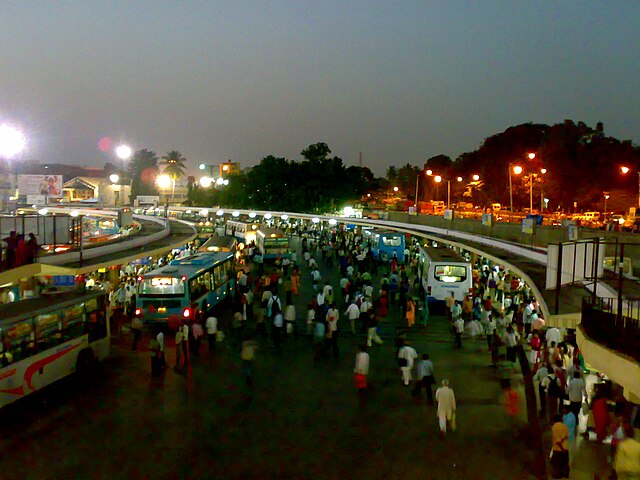
In 1963, the Government of Mysore handed over a large portion of the former tank bed to the Karnataka State Road Transport Corporation (KSRTC) to construct a bus stand. The bus station began functioning in 1968.
Because of its central location near the railway station, it quickly became the most important transport hub in Bangalore. Over time, it expanded to accommodate both intercity and city buses.
In 1981, the modern semi-circular structure of the bus terminal was developed. It was built under the leadership of then Chief Minister R. Gundu Rao. Thus, the lake had officially become a bus station.
The Real Reason Behind the Name “Majestic”
Now comes the actual reason behind the name. The bus station was never officially named “Majestic.” The name came from a nearby cinema hall called Majestic Theatre, which was once a popular landmark in the area.
Built in the early 20th century, Majestic Theatre was well known among Bangalore residents. People began using it as a reference point like, “Get down near Majestic.” Gradually, the name got popular, not just for the theatre, but for the entire locality including the bus stand. Even after the theatre was demolished, the name continued in everyday usage.
Later, the bus terminal was officially named Kempegowda Bus Station, honouring the founder of Bangalore. But for most people, it still remains as Majestic.