After two peaceful days at The Woods Resort, we decided to step out and explore Wayanad. Staying inside the resort was relaxing, but we also wanted to see a few main attractions of Wayanad. The waterfalls, caves and heritage places we had heard about before.
Wayanad is famous for its greenery and cool climate. Roads are surrounded by forests and mountains, so you don’t get bored even while driving. We didn’t rush to cover everything. We selected a few important places and explored them comfortably over two days.
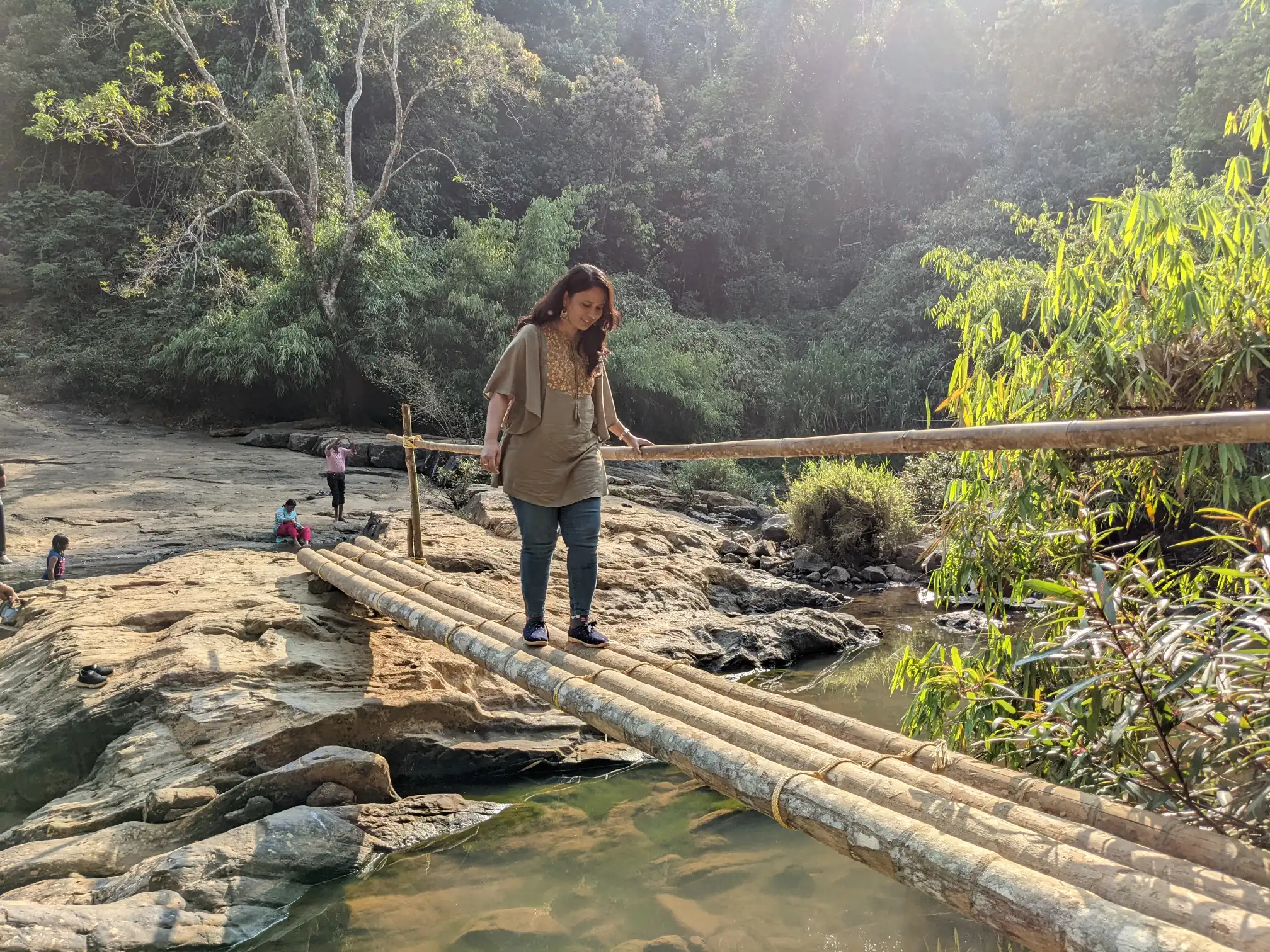
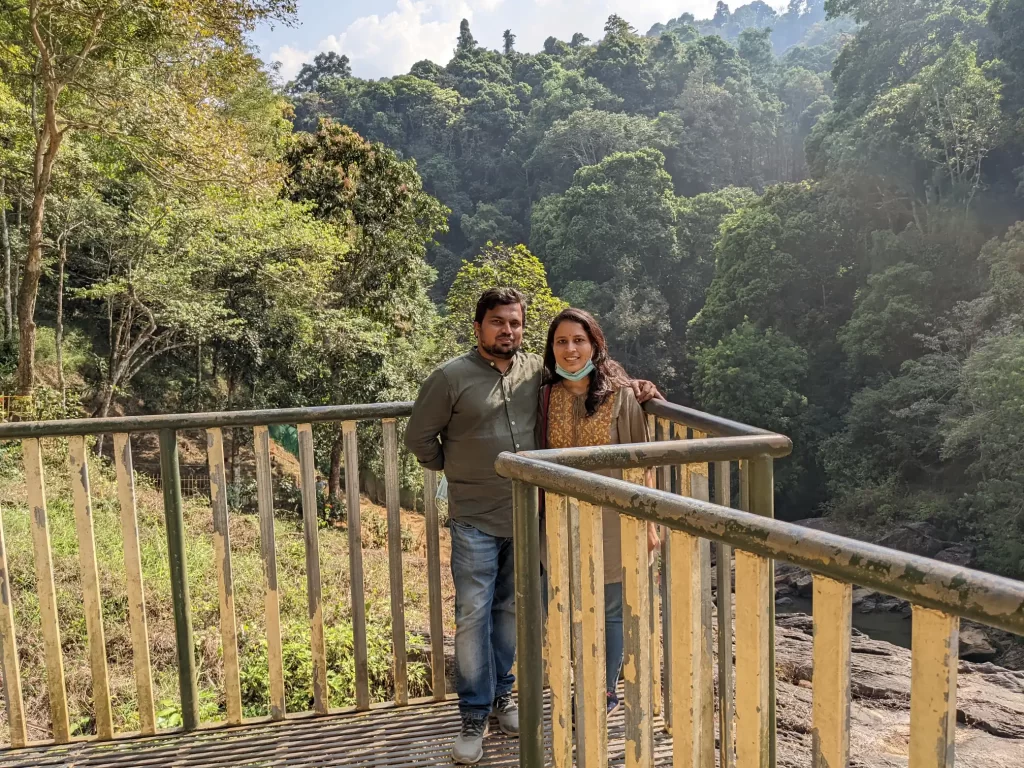
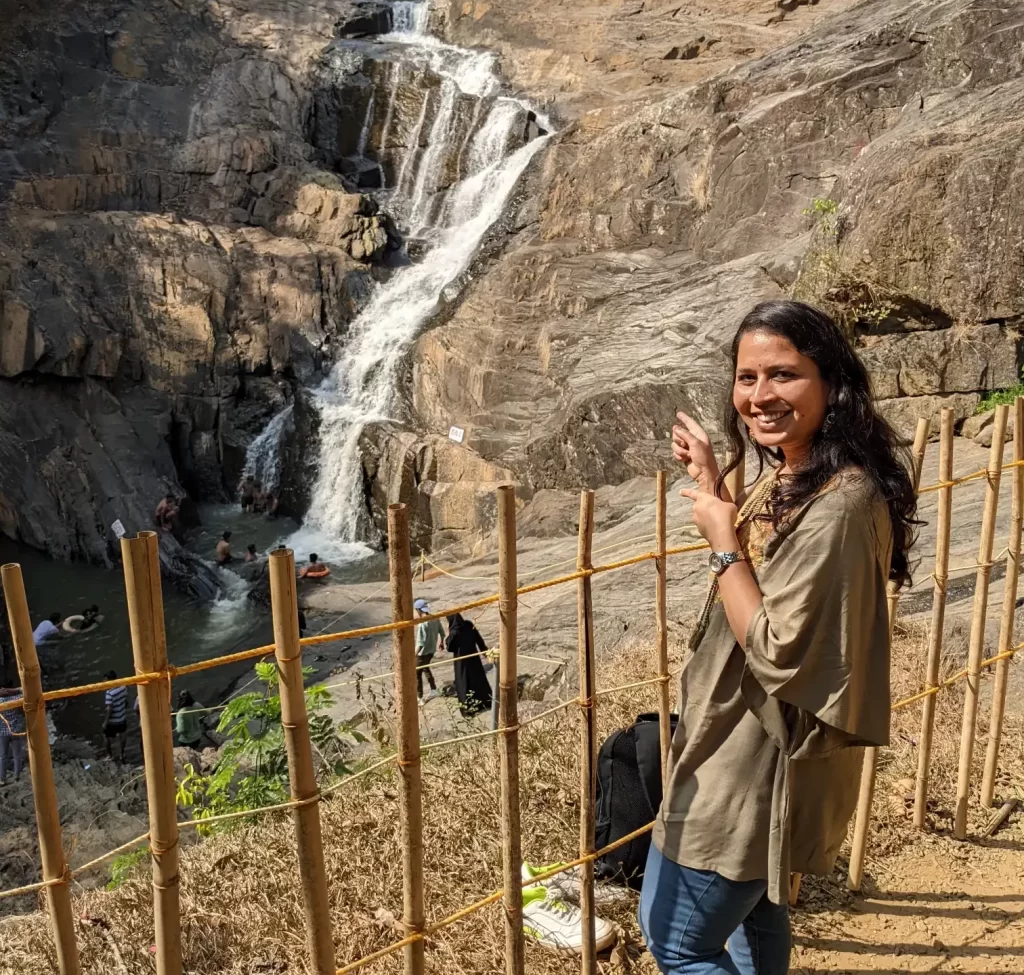
Kantanpara Waterfall
Edakkal Caves:
This was the place I was most excited about – Edakkal Caves or Edakallu Gudda.
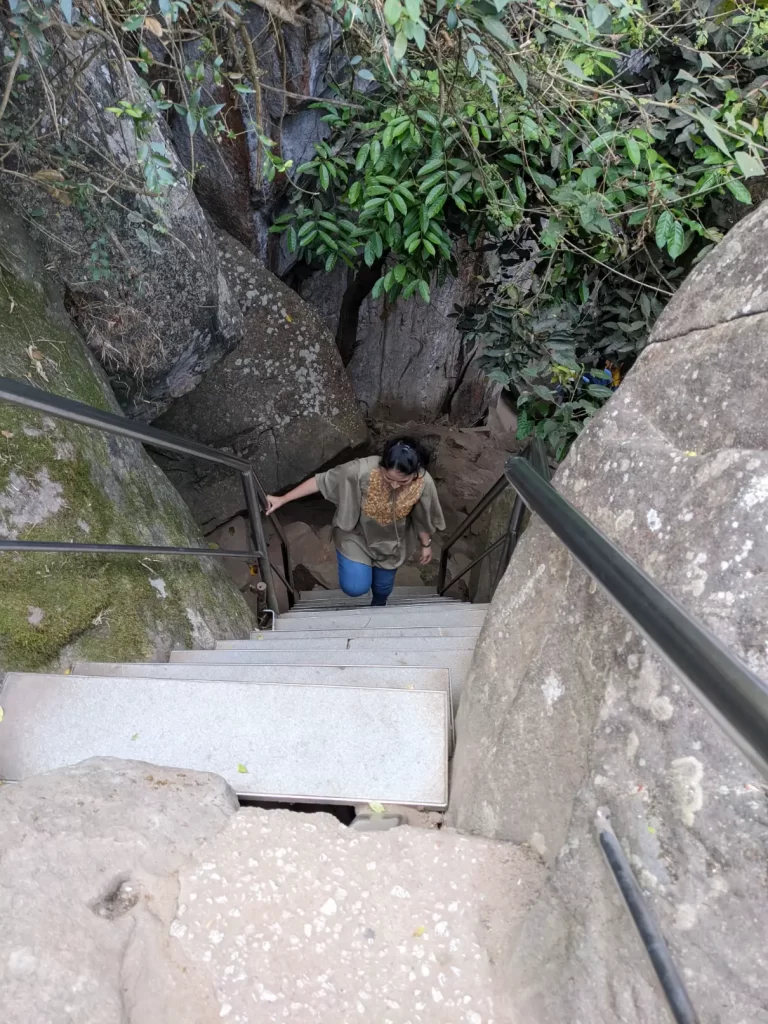
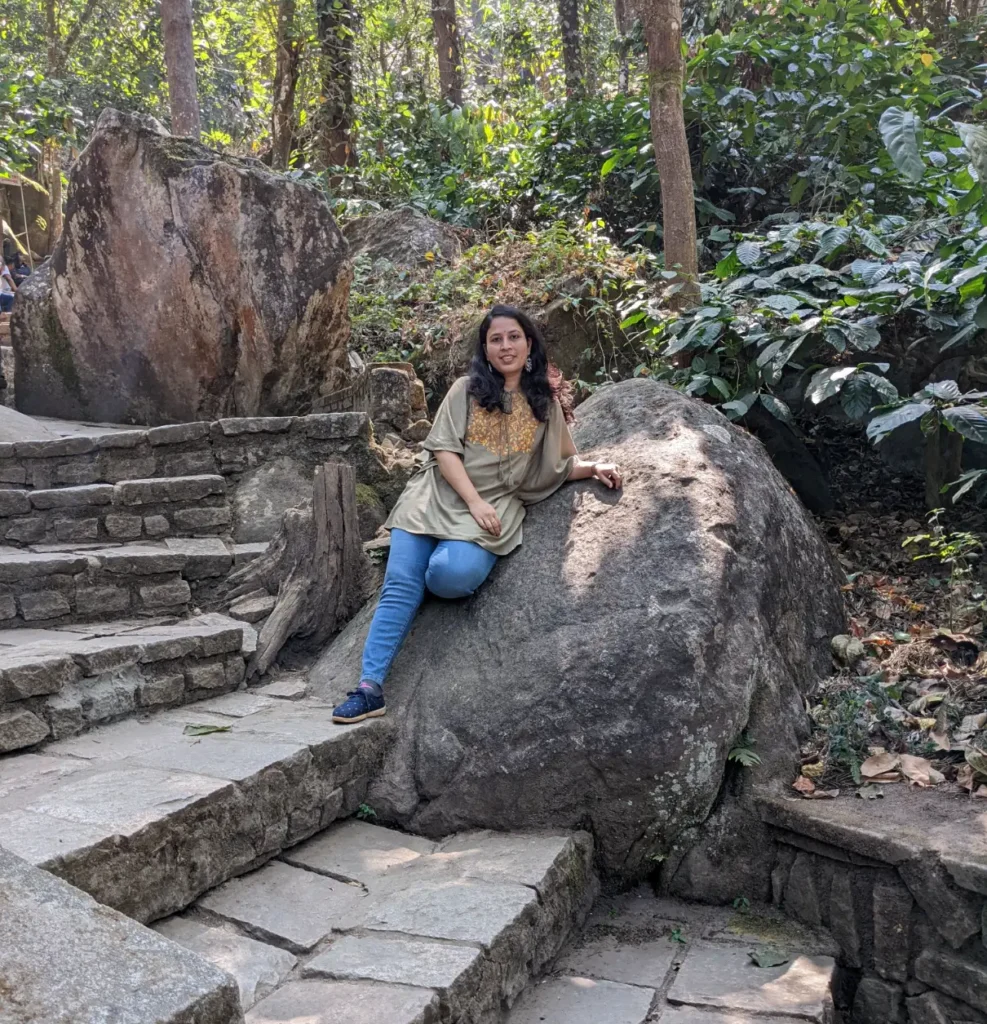
We drove towards Edakkal, which is around 10 km from Sulthan Bathery. These caves are located about 1,200 meters above sea level, on Ambukutty Mala. To reach the caves, we had to climb around 1.5 km uphill and then nearly 380 steps.
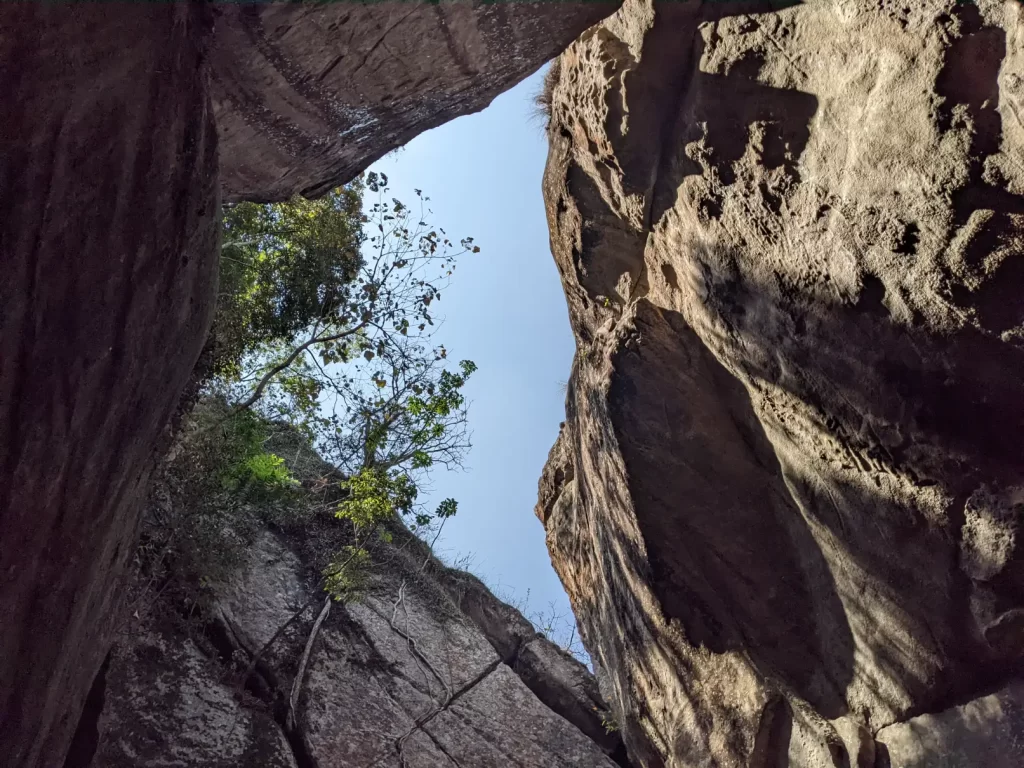
I won’t lie, it was super tiring. The climb is steep in some parts. It may not be easy for elderly people or those with health issues. But we took it slowly and managed to reach.
When we finally reached the top, the view was beautiful. You can see hills and greenery stretching far away. The caves are not very deep. But the ancient carvings on the rocks makes them special. These carvings are believed to date back to around 5000 BC, from the Neolithic period.
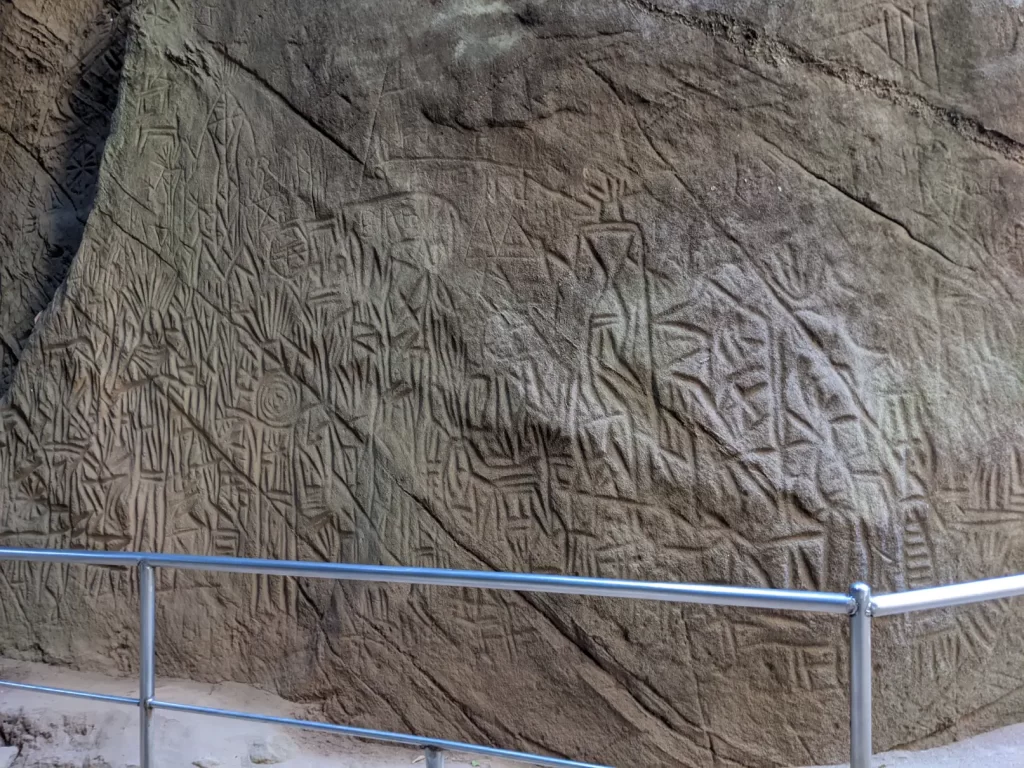
Standing there and looking at those stone markings made me think about how many generations have passed before us.
And here is the interesting partabout Edakkal Caves. This is the same place where scenes from the Kannada movie Edakallu Guddada Mele were filmed. I did not know this until we reached there. When I realised it, I felt so happy. Watching that movie and then standing in the same location felt special.
There is a small entry fee, and they also collect a refundable amount for plastic bottles. Only a limited number of visitors are allowed per day, which helps in maintaining the place. It is better to visit early in the morning to avoid heat and crowd.
Ambalavayal Heritage Museum
After visiting the caves, we headed towards the Ambalavayal Heritage Museum near Sulthan Bathery. To be honest, I didn’t expect it to be very interesting. I thought we would just walk through quickly and leave. But once we stepped inside, I realised it was much more than I imagined.
The museum building itself is constructed in traditional Kerala style, with a simple tiled roof and wooden elements. It doesn’t look very grand from outside, but inside it holds a lot of history.
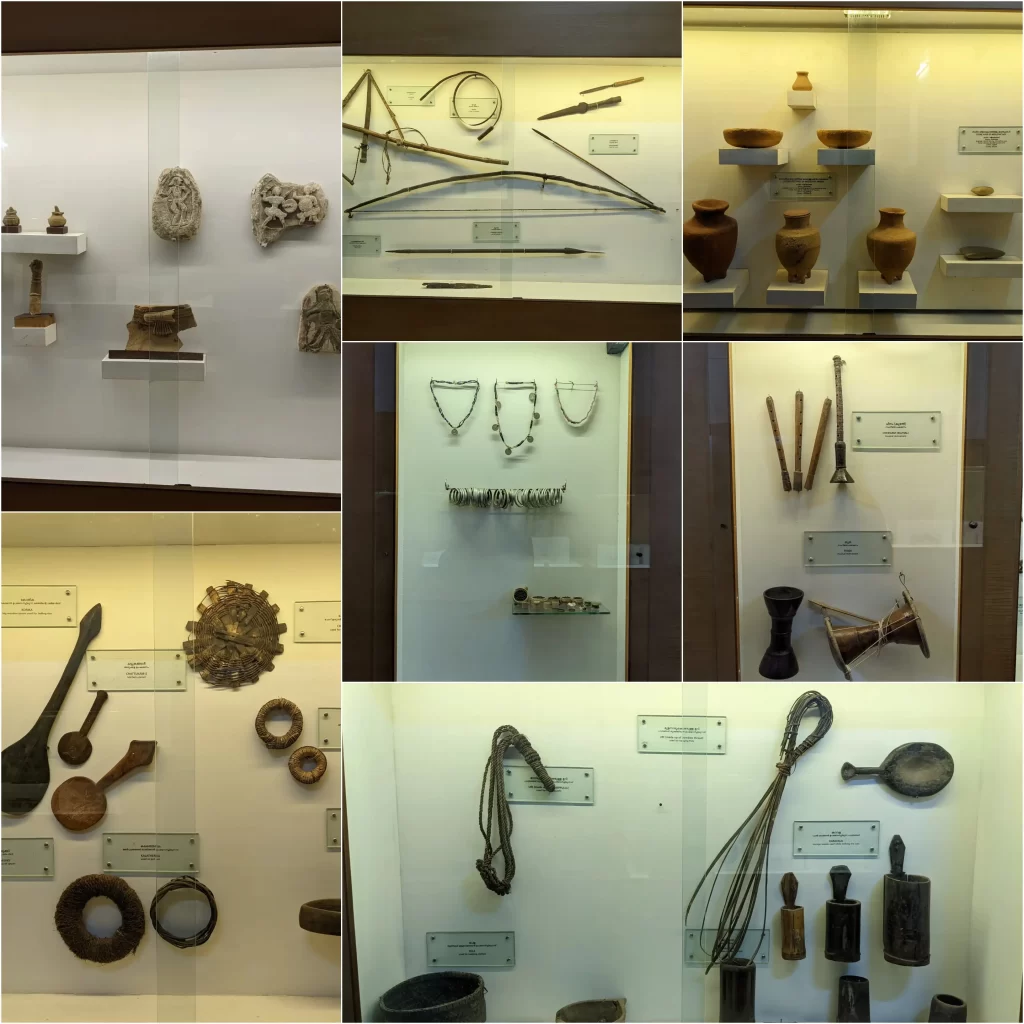
The Museum’s exhibits include:
- Many stone weapons.
- Stone carvings.
- Sculptures from the 14th to 16th centuries.
- Megalithic Age potteries.
- Hunting equipment.
- Clay sculptures.
- Other interesting artifacts.
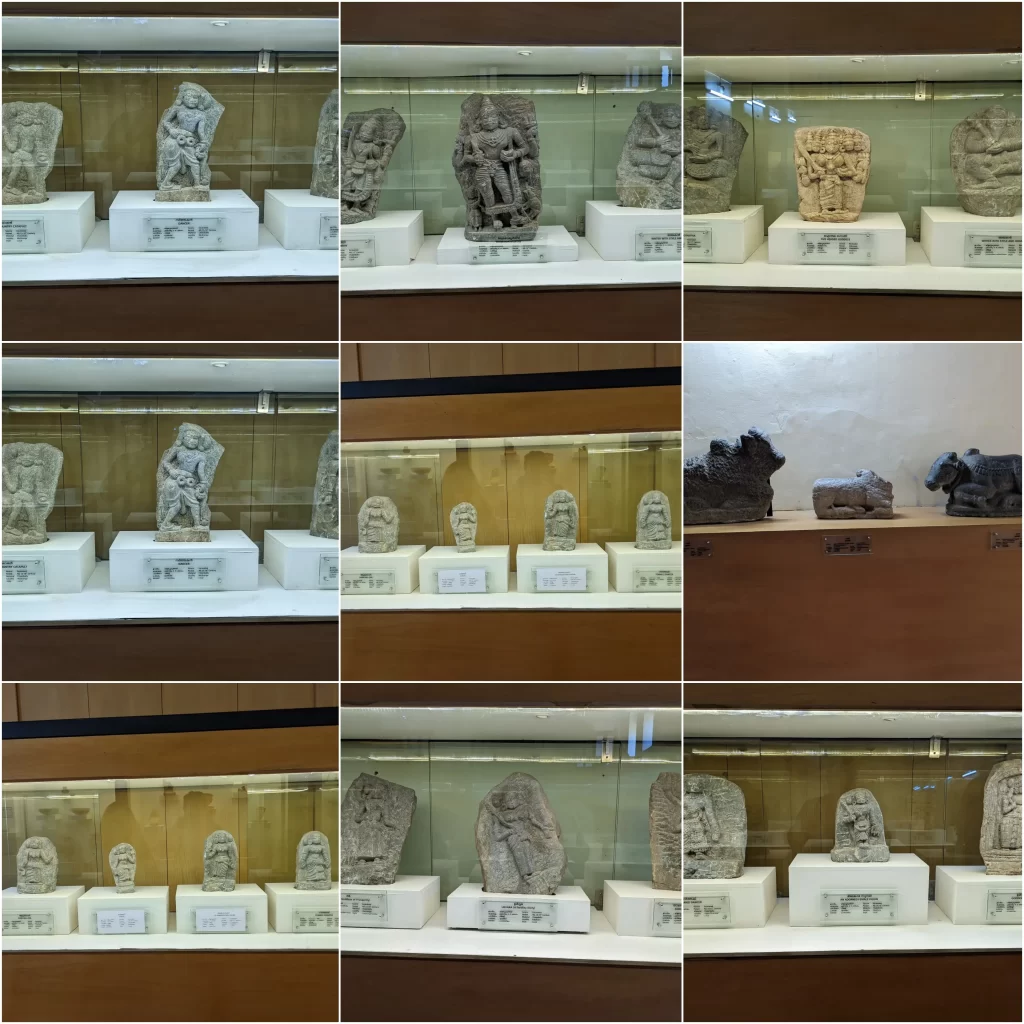
There are different galleries that showcase the tribal culture and early life of Wayanad. We saw ancient stone weapons, old sculptures, hunting equipment, pottery, tribal ornaments, earthen vessels, and tools that were once used in daily life. Some of the stone carvings and hero stones were especially impressive. It is surprising to see how detailed they were, even without modern tools.
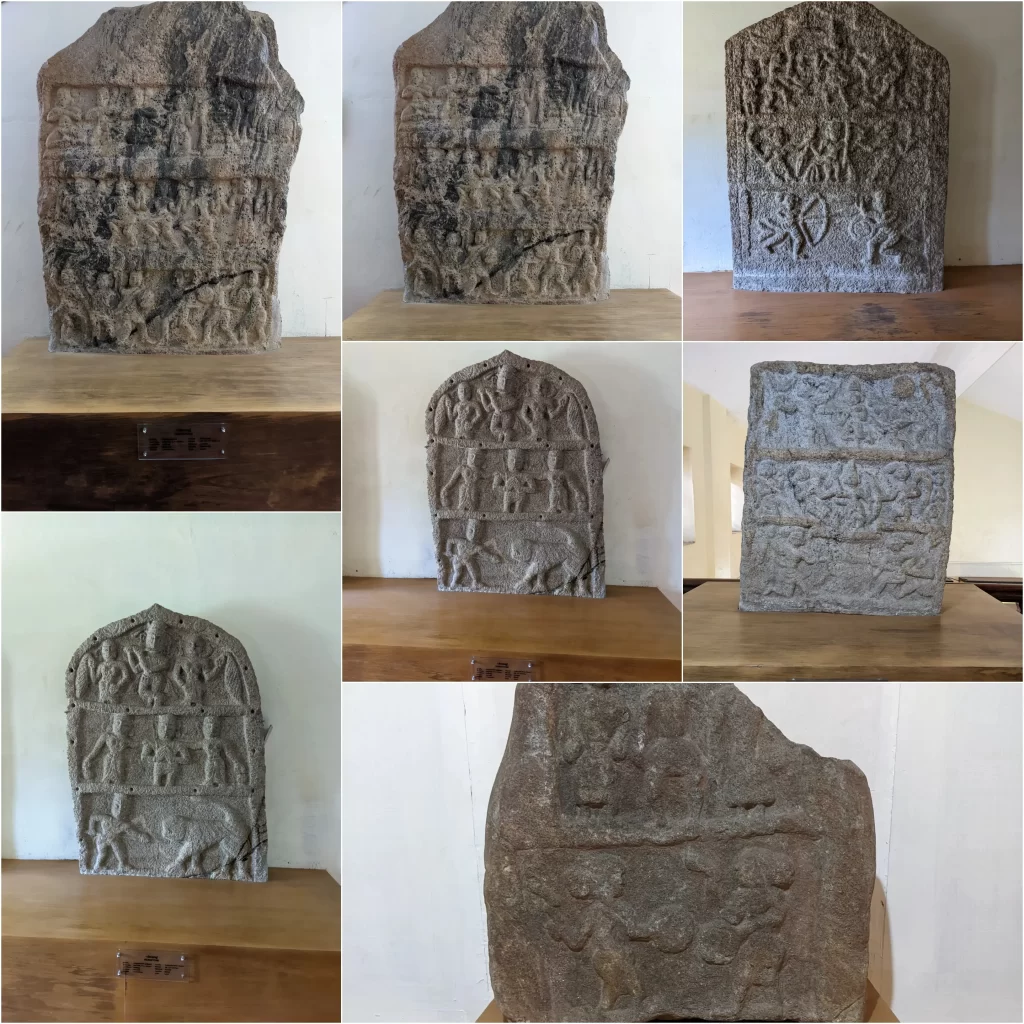
The museum is divided into four sections — Veerasmruthi, Gothrasmruthi, Devasmruthi and Jeevanasmruthi. Each section represents a different part of human life in the hilly regions of Wayanad. One section focuses on hero stones and stories of warriors. Another shows tribal traditions and daily life objects. One gallery displays objects of worship and stone idols, and another shows tools, ornaments and household items used long ago.
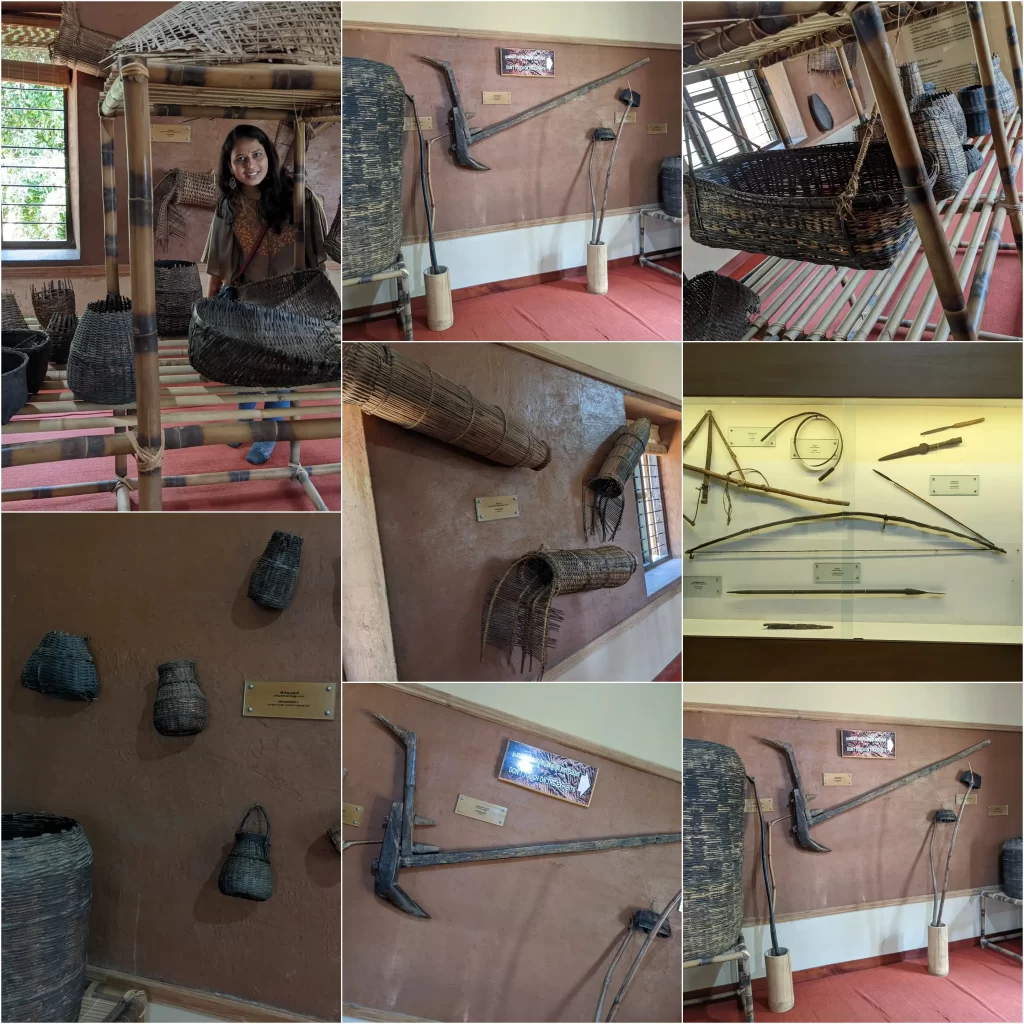
As we moved from one gallery to another, it slowly gave us a picture of how people lived here centuries ago. Their lifestyle was simple but closely connected to nature.
What I liked most was the peaceful atmosphere inside. It was not crowded at all. We could take our time, read the descriptions, and look at each exhibit without any hurry. There was no noise, no rush — just quiet learning.
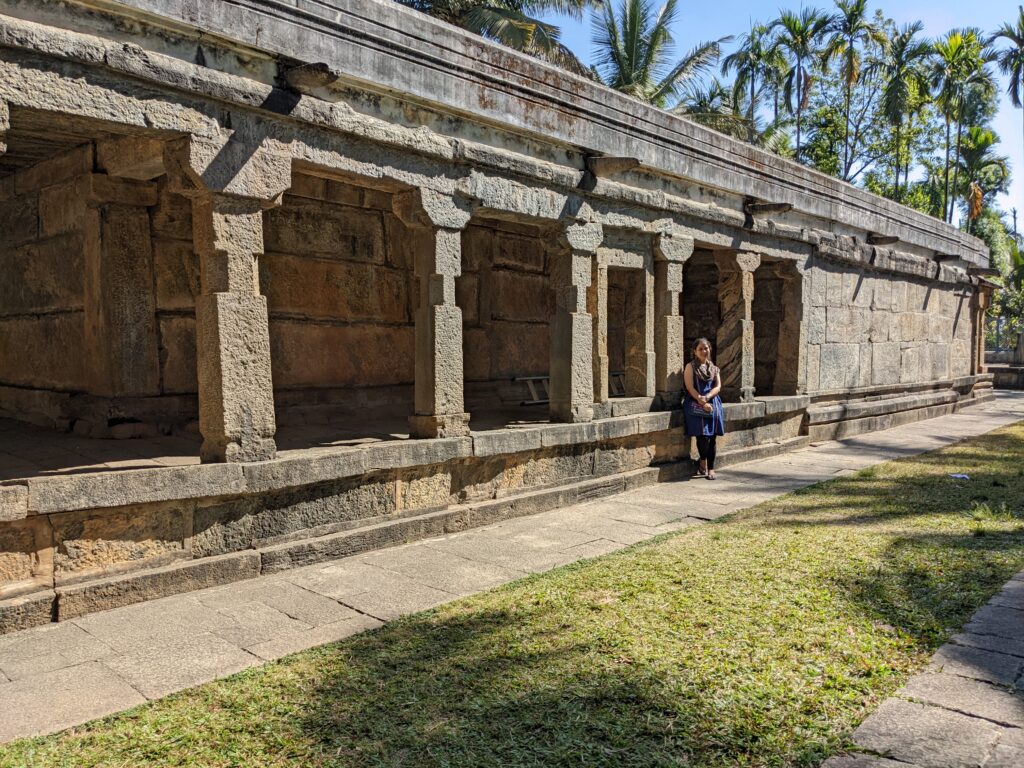
We also visited the Ancient Jain Temple in Sulthan Bathery, locally known as the Bathery Jain Temple. This place has a very interesting history.
The temple is believed to have been built in the 13th century during the Vijayanagara period, not 2000 years ago as many people think. It was originally a Jain temple dedicated to Jain Tirthankaras. Later, during the 18th century, when Tipu Sultan invaded the region, the structure was reportedly used as an ammunition store. In fact, the name “Sulthan Bathery” is said to have come from the word “Battery,” referring to that period.
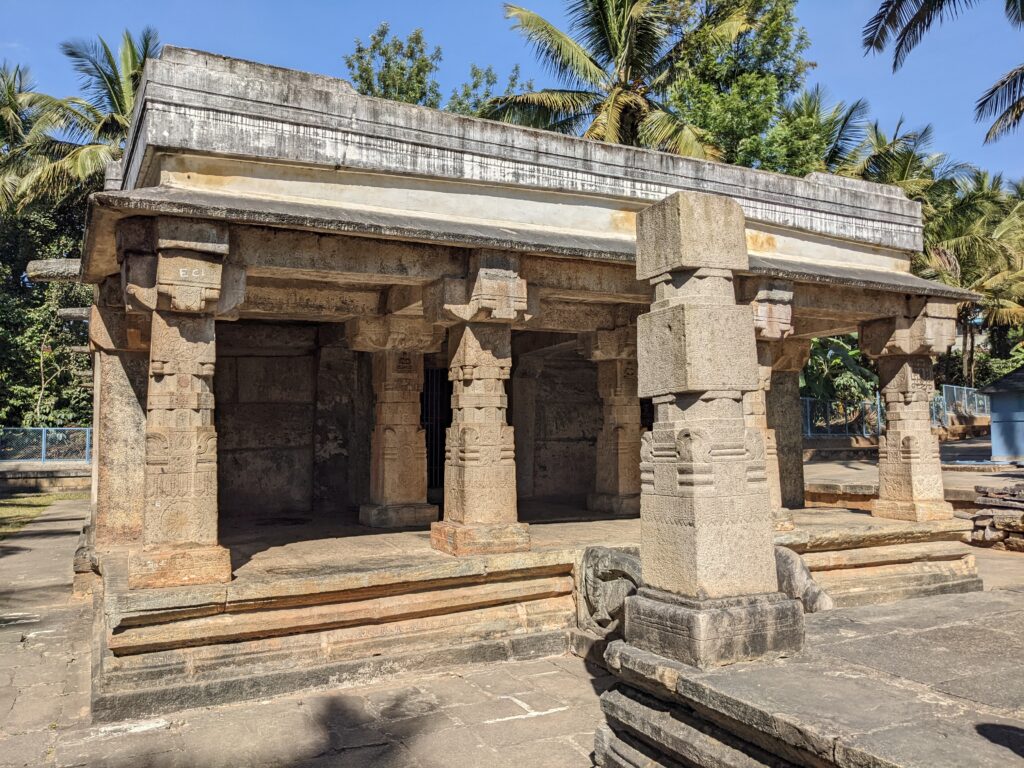
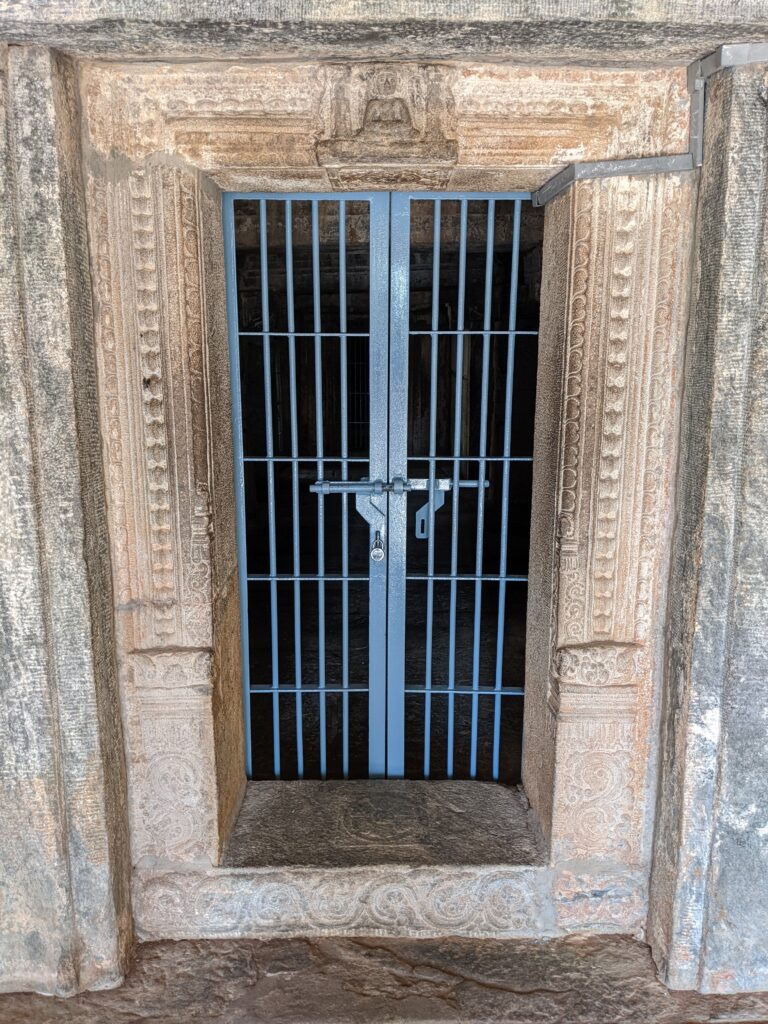
The temple is built completely with large granite stones. The structure looks simple from outside, but when you look closely, you can see detailed carvings on the pillars and door frames. The architecture clearly reflects Vijayanagara style, with strong square pillars and a solid rectangular layout.
Inside, the sanctum and mandapas are plain but graceful. There are carved stone pillars, decorative floral patterns, and figures of Jain Tirthankaras. However, regular poojas are not performed here today. It is now maintained as a protected monument.