
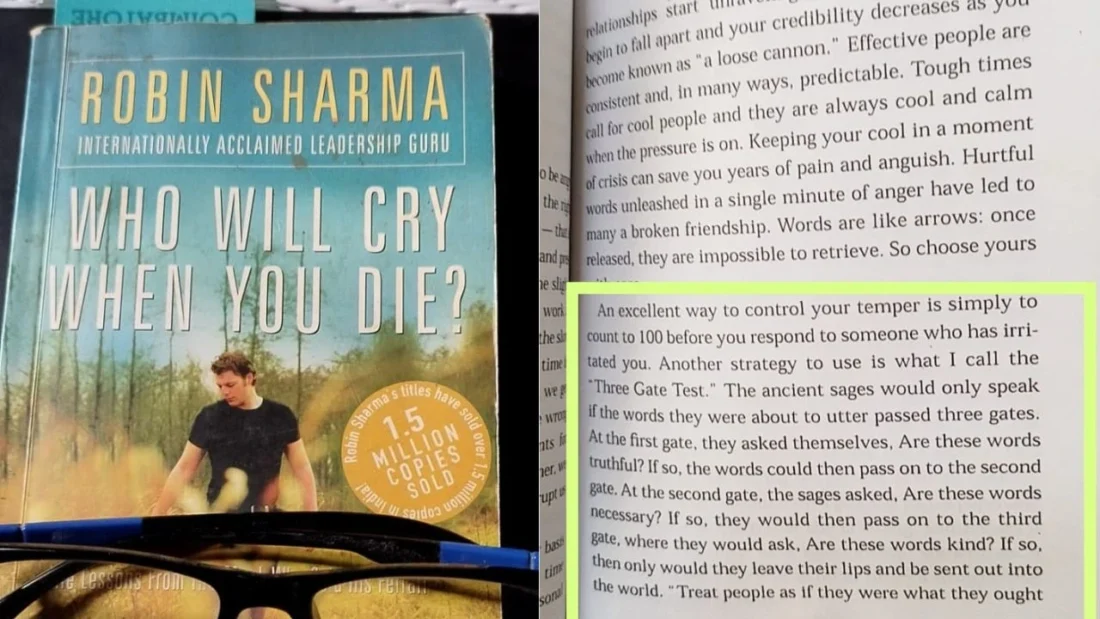
Book: Who Will Cry When You Die?
Author: Robin Sharma
Genre: Self-help / Personal Development
Series: The Monk Who Sold His Ferrari
First Published: 1999
Pages: ~240
“When you were born, you cried while the world rejoiced. Live your life in such a way that when you die, the world cries while you rejoice.”
This is my favourite quote from the book Who Will Cry When You Die. And I have noted this quote in my personal diary too. It is a very simple line, but it quietly makes us think about the way we are living our lives.
My Experience Reading Who Will Cry When You Die?
I had this book on my shelf for almost nine years, but never read it. A friend had gifted it to me long ago. At that time, I never really felt the need to open it. I had that typical feeling many of us have in our twenties — “We are the kings and queens of our lives. We don’t need anyone’s advice.”
But once we cross thirty, life slowly changes our thinking. Things don’t go according to our plans. Responsibilities increase, and we start losing interest in life. That is when we start looking for some clarity and motivation in life.
During that phase of my life, my eyes fell on this book again, while cleaning my bookshelf. And I finally decided to read Who Will Cry When You Die?
This book is written by Robin Sharma. And it is part of his popular The Monk Who Sold His Ferrari series. The title sounds a little heavy and emotional at first. It almost feels like the book might be about death. But once you start reading, you realise it is actually about how we choose to live our life.
The book is not like other novels. It is a collection of 101 short chapters about life. Most chapters are just two or three pages long. Because of that, it doesn’t feel like a heavy self-help book. You can easily read one chapter a day and just think about it.
What I liked about this book is that the advice is very simple and practical. The author does not ask us to suddenly follow some tough rules. Or change everything we are doing in life and change our entire lives. Instead, he talks about some small habits.
For example, he talks about starting the day in a better way. What we do is, we get up and rush to the office. Or we scroll through our phones mindlessly. Instead of that, he suggests spending a few quiet minutes by ourselves, sitting silently, doing nothing. Even that small change can make a difference.
Another idea that I loved is about keeping a journal. Writing our thoughts regularly helps us understand ourselves better. When we read those pages after some time, we start noticing the changing patterns in our behavior.
The book also talks about learning to say no. We are not bound to do everything for everyone. Many of us say yes to everything because we don’t want to disappoint others. Slowly, it becomes stressful. This book tells us that protecting our time and energy is also important. So learn to say no to the people sometimes.
One more thing that felt very true is about showing simple kindness. We are growing so much ego within us that we forget to be kind to the people. Small acts like appreciating someone, helping a friend, or speaking kindly may look small. But they slowly shape our relationship with others.
The chapters about honoring our promises and developing our talents are also meaningful. Another simple lesson in the book is about spending time in nature, which we often ignore in our busy routine.
While reading this book, I also realised that, we get so busy with work, responsibilities, and daily stress. In that we sometimes forget to actually live our lives. Days pass, months pass, and suddenly years pass, without even realising it. In between all this, we forget small things like spending time with family, reading a good book, or simply sitting quietly for a few minutes.
This book gently reminds us to slow down a little and pay attention to life.
What I Liked Most About This Book
One thing I liked about this book is its simplicity. The lessons are not complicated. They are small reminders that we already know somewhere in our minds. But often forget in daily life.
Another good thing is the structure of the book. Since each chapter is only two or three pages, it never feels overwhelming for the reader. Even if you read just one lesson a day, it gives you something to think about.
Also, the author does not preach too much. Instead of telling readers what to do, he shares ideas in a gentle way. That makes the book easy to read and easy to reflect on.
This book is useful for:
- People who feel a little lost or stressed in life
- Readers who want to start reading self-help books
- Anyone who wants simple life reminders rather than complex theories
- Busy people who prefer reading small chapters instead of long books
Even if someone reads just a few lessons from the book, it can leave a positive thought in their mind.
Who Will Cry When You Die? is not a complicated self-help book. It feels more like someone sharing small life lessons from their experience. Some ideas may look very simple, but sometimes the simplest reminders are the ones we need the most.
After finishing the book, one question stayed in my mind: Are we really living in a way that touches other people’s lives?
Maybe that is the real intention of the book — not to scare us with the idea of death, but to quietly ask us a question: Are we really living well today?
If you enjoy thoughtful books that make you reflect on life, you may also like my review of Jalapatha by S. L. Bhyrappa.