You’ve heard them hundreds of times. In theaters, on Netflix, through earphones at 11pm. But did you know that some of the most iconic lines in American cinema are built around body idioms — phrases where the body describes something the heart feels?
Here are the ones hiding in plain sight.
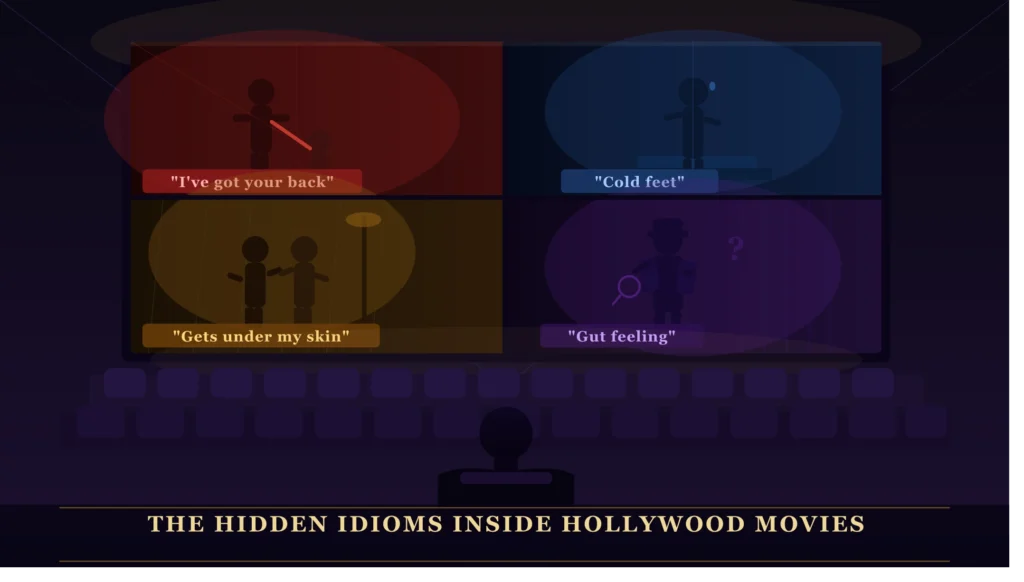
“I’ve Got Your Back” — Action Films
Three words. No speech required.
This phrase appears in nearly every action film made since the 1980s — from Top Gun to Black Panther to John Wick. It’s so common that directors use it as shorthand: the moment one character says it to another, the audience knows their bond is real.
What it means: To support and protect someone, especially when things get dangerous.
The phrase likely grew from military usage, where watching a fellow soldier’s back — the blind spot they couldn’t cover — was literally a matter of survival. In film, it became emotional shorthand for loyalty.
“Break a Leg” — Every Backstage Scene
Before a performance, someone always says it. In La La Land, in Whiplash, in Birdman.
“Break a leg out there.”
What it means: Good luck, especially before a performance.
The origin is genuinely strange. Theater performers in the early 20th century believed saying “good luck” would jinx a show. So they said the opposite — wishing bad luck to trick fate into delivering good luck instead. The tradition stuck. Today it’s the standard send-off in every dressing room in America.
“She Gets Under My Skin” — Romance Films
It shows up in almost every love story told in American English.
The character fights the feeling. They stay rational. Then — usually in the rain, usually at 2am — they give in.
What it means: When someone affects you so deeply that you can’t stop thinking about them — they’ve worked their way inside you.
Cole Porter wrote a song called “I’ve Got You Under My Skin” in 1936. Frank Sinatra recorded it in 1956. It became one of the most recognized songs in American music. The idiom was already old when Porter used it — but he gave it permanence.
“By the Skin of His Teeth” — Thrillers
The door closes one second after they roll through. The timer hits 00:01. The wire gets cut just in time.
Every thriller is built on this phrase, whether it’s spoken or just shown.
What it means: To escape or survive by the absolute smallest margin possible.
The phrase is one of the oldest in the English language. It comes from the Bible — the Book of Job, Chapter 19, Verse 20. Job describes surviving total catastrophe: “I have escaped only by the skin of my teeth.” Scholars believe “the skin of the teeth” referred to the thin enamel coating — essentially nothing. The escape was as narrow as it gets.
“Cold Feet” — Wedding Films
Runaway Bride. The Wedding Singer. My Best Friend’s Wedding.
The genre practically exists to dramatize this one idiom.
What it means: A sudden rush of nervousness or doubt right before a major commitment — especially marriage.
The phrase appeared in American English in the late 1800s. One early published use is in a Stephen Crane short story from 1896. By the 20th century, it was the standard phrase for pre-commitment anxiety — and Hollywood figured out that audiences would watch it play out in a wedding dress every single time.
“A Gut Feeling” — Detective Shows
Sherlock has it. Columbo built an entire career on it. Every detective worth watching trusts it over logic at some point.
“I’ve just got a gut feeling about this one.”
What it means: A strong instinct about something, even without rational evidence.
Here’s what makes this idiom genuinely interesting: science backs it up. The gut contains what neurologists call the enteric nervous system — roughly 500 million neurons lining the gastrointestinal tract. It communicates constantly with the brain via the vagus nerve. When you feel something in your gut, your body is actually processing information. A gut feeling isn’t just a phrase. It’s biology.
The Real Reason Screenwriters Use These Phrases
Body idioms compress emotion into three or four words. A character who says “I’ve got your back” doesn’t need a backstory monologue. A character who “gets cold feet” tells you everything about their inner conflict without a therapy scene.
That’s why the best writers reach for them. And once you know what to listen for, you’ll hear them in every film you watch from here on out.
Want to learn more? Check out our full guide: 60+ Body Idioms in American English With Real-Life Examples — every phrase explained simply with clear meanings and everyday examples.
Related Posts: